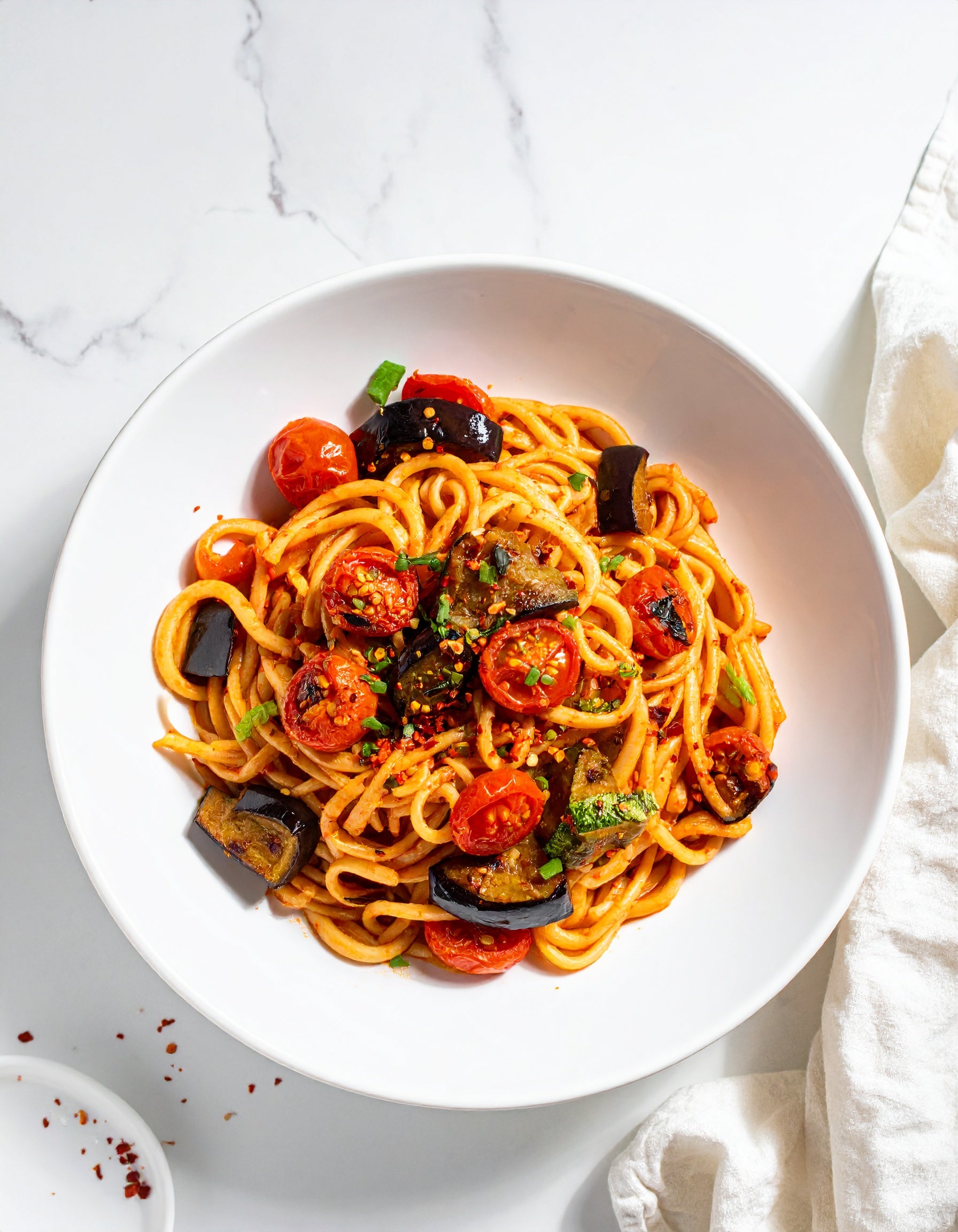
Stories: Umbria — Pasta Without an Exit

The Land That Doesn’t Negotiate
Umbria is Italy without an escape route.
It has no coastline, no ports, no maritime pantry to fall back on. It sits folded into the central Apennines, enclosed by hills, valleys, and internal borders that historically slowed movement, trade, and ideas. For centuries, this geography shaped not only how Umbrians lived, but how they ate. Food here did not evolve through exchange or spectacle. It evolved through necessity.
Compared to neighbouring Tuscany or Lazio, Umbria remained quieter, more inward-looking, and more conservative. Not culturally timid — structurally constrained. Routes passed through, armies crossed it, popes ruled it at times, but daily life remained agricultural, repetitive, and local. There was little incentive to cook for outsiders. Meals were cooked to sustain work, seasons, and households.
That lack of negotiation with the outside world is still legible on the plate. Umbrian cuisine does not chase balance for elegance’s sake. It favours density, bitterness, fat, and restraint. Pasta here is not designed to seduce; it is designed to hold.
Understanding Umbria means accepting that its food culture is not a regional variation on a national idea. It is a closed system, shaped by land, livestock, and labour. Pasta, when it appears, carries that weight.
 Grain Before Glory
Long before pasta became a recognisable category, Umbria was a land of grain — but not of abundance. Archaeological and historical records point to a mixed cereal culture inherited from Etruscan and Roman agriculture: farro, barley, soft wheat, and legumes formed the base of sustenance. Refined wheat flour was not consistently available, and when it was, it was precious.
The daily diet revolved around bread, porridges, thick soups, and later, dumpling-like starches. These foods required minimal processing, stretched limited resources, and fed labour-intensive lives. Pasta did not arrive as a culinary breakthrough; it emerged gradually, as techniques evolved and household economies stabilised.
This matters because it explains why Umbrian pasta never became thin, light, or ornamental. There was no cultural pressure toward delicacy. The function of starch was to nourish and endure. Thickness, chew, and satiety mattered more than refinement.
Even when pasta began to appear more regularly in Umbrian kitchens, it remained tied to these older logics. Shapes stayed simple. Doughs stayed robust. Pasta was absorbed into an existing system rather than celebrated as a novelty.

Dough Logic: Eggs, Water, and Hands
Umbrian pasta culture rests on a quiet but important duality: egg-based doughs and water-only doughs exist side by side, not in opposition, but as responses to different contexts.
Egg pasta became prominent because it made sense. Eggs were available in rural households, added protein, and produced doughs that were cohesive, resilient, and filling. In an inland region with limited access to luxury ingredients, eggs enhanced both nutrition and structure. Pasta enriched with eggs could stand alone or support modest accompaniments.
Water-only doughs also persisted, particularly in areas influenced by Lazio or shaped by wheat scarcity. These doughs relied entirely on flour quality and manual technique. They produced thick, blunt shapes designed to be torn, rolled, or pulled by hand rather than delicately cut.
Across the region, shaping remained domestic. Pasta was not standardised, industrialised, or codified into rigid forms. Techniques were transmitted within households, often by women whose primary identity was not “pasta maker” but farmer, labourer, or caretaker. Precision existed, but it was tactile rather than measured.
This is why Umbrian pasta shapes tend to feel stubborn. They resist uniformity. They carry the marks of hands rather than tools. They are built to withstand assertive condiments and long chewing, not fleeting textures.
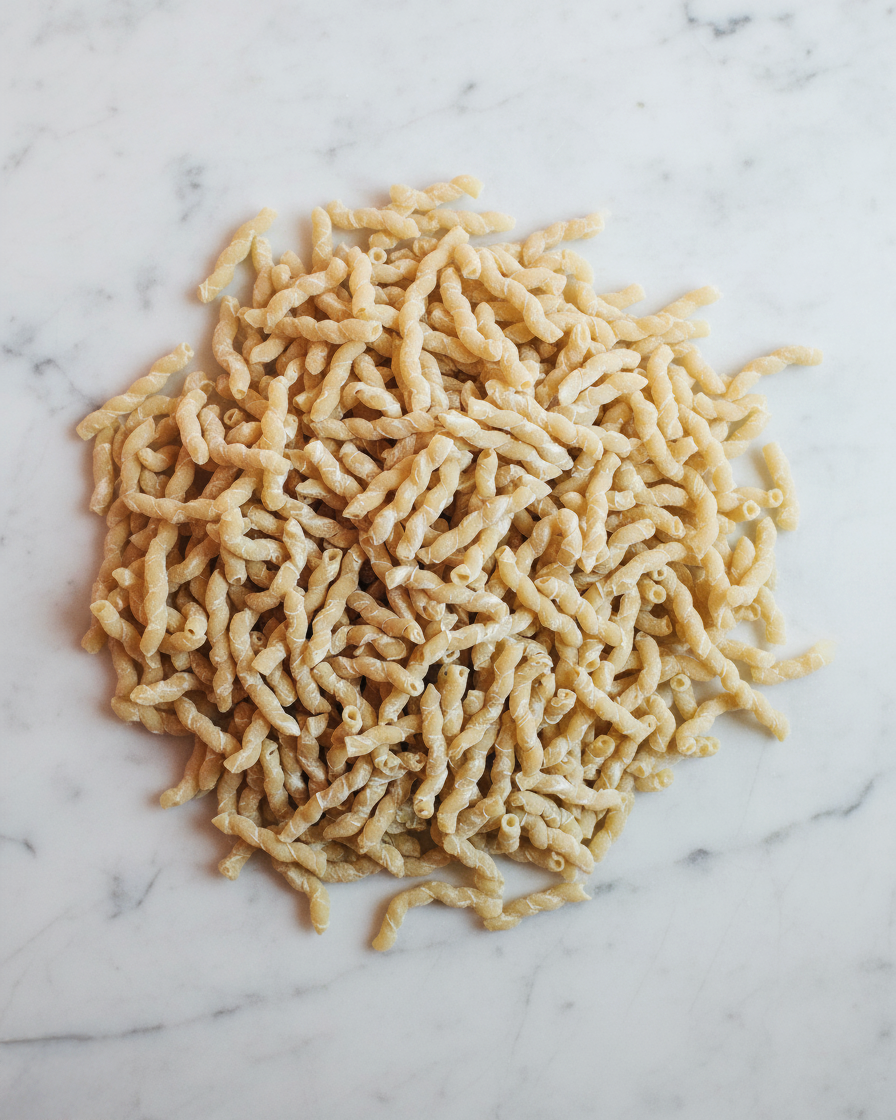
Names like strangozzi, umbricelli, and ciriole surface repeatedly across the region, sometimes changing dough composition or thickness from valley to valley. These are not variations chasing creativity; they are adaptations shaped by available resources and local habits.
 The Pig at the Centre
If grain explains the structure of Umbrian pasta, the pig explains its flavour.
Umbria’s culinary history cannot be understood without norcineria — the art and economy of pork processing that developed most famously around Norcia but extended far beyond it. In a region where preservation mattered more than abundance, the pig became a reliable system: meat, fat, offal, and cured products ensured sustenance throughout the year.
Fat, in particular, played a decisive role. Lard, rendered pork fat, and cured cuts provided energy and flavour in a landscape where olive oil, though present, was not always plentiful or used lavishly. Pork-based condiments became natural companions to pasta shapes designed to hold and absorb them.
This is why Umbrian pasta culture gravitates toward guanciale, sausages, and simple meat-based sauces. Not because of indulgence, but because of logic. Pork offered continuity. It linked slaughter season to the rest of the year, and pasta became one of its most efficient carriers.
Historically, offal and secondary cuts also featured prominently. Nothing was wasted. These elements reinforced a cuisine built on completeness rather than selectivity. Pasta served as a neutral but sturdy base, allowing the pig to remain central without excess.
 Olive Oil Without Theatre
Olive oil does belong to Umbria, but it behaves differently here.
Umbrian olive groves sit at higher altitudes than many coastal or southern regions, producing oils that are grassy, bitter, and assertive. These oils are not naturally suited to heavy cooking or lavish pouring. Historically, they were valued and used with care.
As a result, olive oil in Umbrian cooking tends to finish rather than build. It sharpens, lifts, and defines dishes rather than forming their backbone. Excessive oil would have been wasteful; restraint was both economic and cultural.
This distinguishes Umbrian oil culture from the more performative uses seen elsewhere. There is no ritualised abundance, no theatrical slick. Oil is applied deliberately, often raw, and expected to announce itself clearly but briefly.
In pasta dishes, this means oil rarely overwhelms structure. It supports dough and condiments rather than dominating them. The result is a clarity that feels austere but precise.
Pulses, Fields, and Wild Edges
Vegetables in Umbrian cuisine rarely play leading roles, but they are not absent. They exist as part of a broader agricultural rhythm shaped by fields, seasons, and foraging.
Lentils, particularly those grown in high-altitude plains such as Castelluccio, have long been valued for their reliability and nutritional density. Farro, another ancient grain, bridges cereal and legume cultures, reinforcing the region’s preference for foods that sustain rather than decorate.
Wild greens and bitter vegetables reflect both ecology and taste memory. Umbrian palates historically accepted bitterness as normal, even desirable. Sweetness was not abundant; depth came from earthiness and contrast.
In pasta culture, these elements often remain secondary — folded into sauces or served alongside rather than showcased. This is not neglect, but hierarchy. Vegetables support structure; they do not replace it.
Truffle: Luxury by Geography, Not Tradition
Few ingredients are as closely associated with modern Umbria as black truffle, and few are as misunderstood.
Truffles grow in Umbria because the conditions are right: soil composition, tree species, climate. Their presence is geographical, not cultural. For much of Umbrian history, truffles were foraged opportunistically, consumed locally, and rarely central to everyday cooking.
Their elevation to culinary symbol is relatively recent, tied to market demand, tourism, and the modern appetite for luxury markers. Pasta with truffle, now ubiquitous in restaurants, reflects contemporary taste more than historical practice.
This does not make truffle illegitimate, but it requires perspective. In Umbrian logic, truffle is an accent — seasonal, restrained, and secondary to structure. When treated as an identity, it distorts the cuisine.
Understanding this distinction is crucial. Umbrian pasta does not revolve around truffle; truffle occasionally passes through it.
Why Umbrian Pasta Never Travelled
Umbria never produced a single pasta dish that could represent it abroad, and that absence is telling.
There is no universally codified sauce, no iconic export shape, no industrial tradition that translated easily beyond the region. Pasta here remained local, domestic, and variable. It resisted standardisation because it never needed it.
Recipes changed from household to household. Techniques adapted to conditions. This made Umbrian pasta resilient but unexportable. Without a fixed identity, it did not lend itself to branding.
Rather than seeing this as a failure, it is more accurate to see it as consistency. Umbrian pasta remained embedded in its environment. It survived by not leaving.
The Present: Continuity with Selective Change
Today, Umbrian pasta culture continues much as it always has, though not untouched by change.
Home cooking still defines the region more than restaurants. Trattorias preserve simple structures, often repeating the same few pasta forms without variation. Innovation exists, but quietly, and rarely at the expense of coherence.
Some contemporary kitchens explore refinement, technique, and presentation, occasionally incorporating pasta into broader narratives of modern Italian cuisine. When successful, these efforts build on structure rather than replacing it.
What remains striking is how little Umbrian pasta has been reshaped to meet external expectations. It has adapted, but it has not performed.
Pasta as a Closed System
Umbria teaches a difficult lesson: not all cuisines want to be understood quickly.
Its pasta culture resists simplification because it was never designed for display. It belongs to a region that cooked inward, conserved resources, and valued endurance over expression.
To read Umbrian pasta correctly is to accept restraint as intelligence. Here, pasta does not speak loudly, but it speaks consistently. It holds history without advertising it.
In a country famous for culinary theatre, Umbria remains a reminder that some of the most coherent food cultures exist precisely because they refused to negotiate.