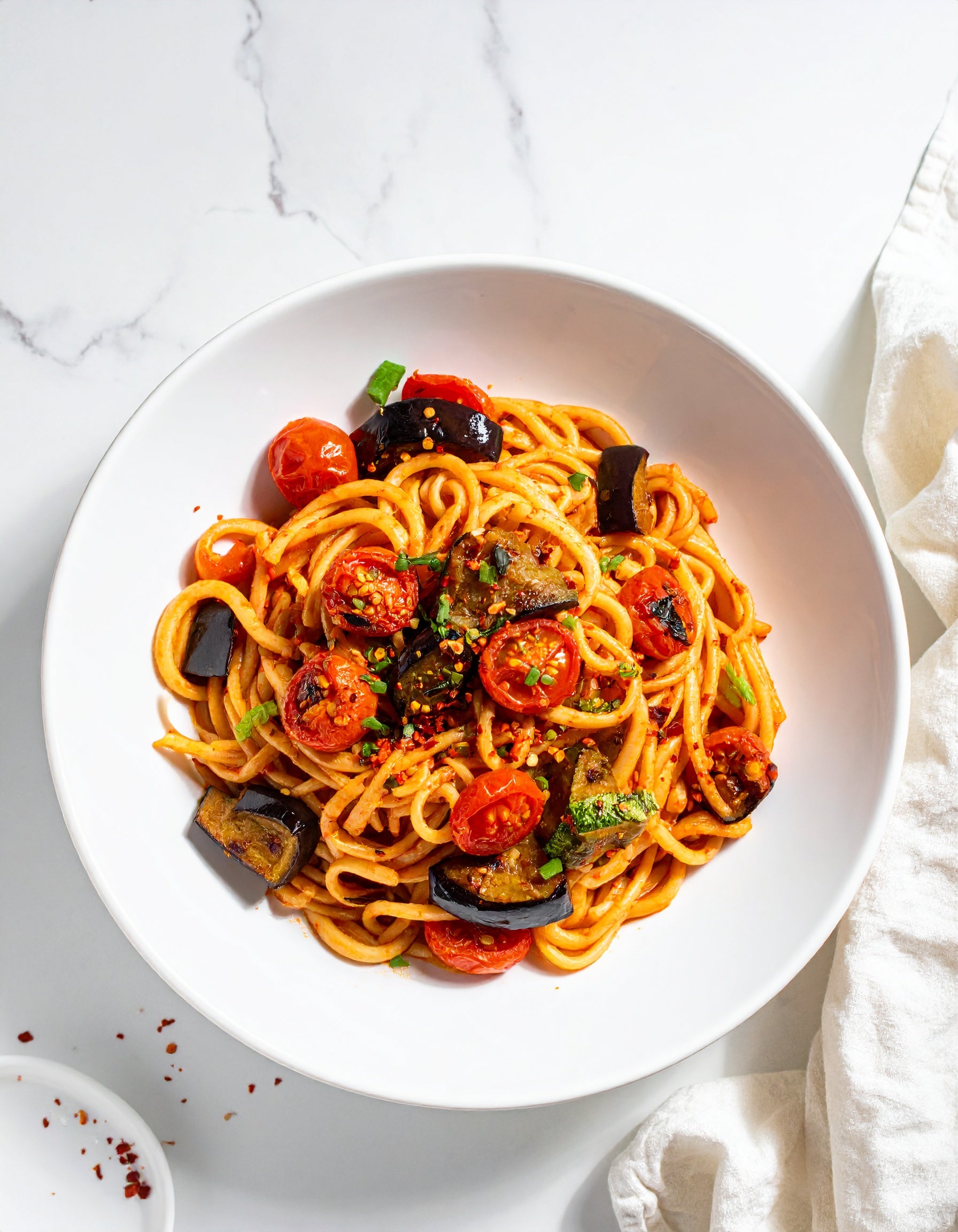
Stories: Tuscany — The Quiet Geometry of Taste
 Where landscape shapes appetite, and appetite answers with clarity.
The Landscape That Thinks
All of Italy knows how to eat, but Tuscany does it with a certain clear-headed calm.
Here, between the Apennines and the Tyrrhenian Sea, food is never chaotic or ornamental. It works the way the land works: grounded, intentional, shaped by long lines rather than flourishes.
The Val d’Orcia unrolls like a measured sketch — wheat, stones, cypress — organised with geometric serenity.
The Chianti hills ripple with vineyards and olive trees arranged as if by a quiet perfectionist.
The Maremma stretches wild and muscular, where scrubland and boar still dictate the rules.
The Garfagnana and Lunigiana guard their mountains, their farro, and their shadows like old secrets.
In the centre, the cities behave like stone manifestos:
Florence, precise and self-assured.
Siena, Gothic and stubborn.
Pisa, turned toward the sea.
Lucca, enclosed and contemplative.
To cook in Tuscany is to follow the logic of these landscapes.
The soil is generous but not indulgent. The climate kind but not tropical. The region produces enough, but never so much that cooks become careless. That is why Tuscan food has an unflashy confidence — it trusts its ingredients enough to let them take the lead.
Everywhere you go, something is happening quietly with flavour.
In farmhouse kitchens, beans simmer patiently on the stove while someone rolls pici at the table.
In the Maremma, a hunter rinses wild herbs that will anchor a pot of boar ragù.
In Lunigiana, a heavy stone testo heats slowly before batter becomes testaroli.
Along the coast, Livornese cooks warm garlic and olive oil as if conducting a ritual learned generations ago.
If Rome cooks with theatre and Naples cooks with emotion, Tuscany cooks with clarity over clutter.
A plate of pasta here is a kind of architectural drawing — clean lines, balanced volumes, nothing that doesn’t belong.
 From Etruscans to City-States
To understand Tuscany’s cuisine, go back to the Etruscans.
They farmed grains, pressed early olive oils, cooked on hot stones, baked flat cakes of flour and water, and built the earliest foundations of what would one day become testaroli. Their food was pragmatic elegance: no excess, no waste, just clever use of what the landscape gave.
Rome arrived with its empire, spices and spectacles, but Tuscan kitchens held their ground. Where Roman elites roasted exotica, Tuscans boiled farro, stewed broad beans, and seasoned with herbs that grew reliably in the hills.
Purposeful, grounded, and unmoved by fashion.
The Middle Ages rewired the region.
City-states fought, salt taxes strangled trade routes, and poverty pushed cooks to reimagine ingredients. Bakers removed salt from bread to survive. That single decision produced an entire culture of invention:
- bread reused in soups, salads, stews
- vegetables elevated to centre stage
- sauces built from simplicity rather than luxury
- pasta shaped by hand, often from water and flour alone
This wasn’t austerity — it was resourceful creativity.
The Renaissance then placed a layer of intellectual confidence over this rural practicality. Florence became Europe’s thinking engine, and even its food absorbed the priorities of humanism: proportion, harmony, clarity. Tuscan cooks avoided the sugary, spice-laden excesses popular elsewhere. They preferred ingenuous simplicity — food that expressed the truth of its ingredients without disguise.
By the time tomatoes arrived, the region already had a philosophy waiting for them. They weren’t turned into flamboyant sauces. They were folded, patiently, into bread and oil.
Tuscan cuisine didn’t expand — it refined.
And the pasta?
It stayed rooted in landscape, hands, and habit.
Shapes remained tactile, modest, functional.
It wasn’t until outsiders began glamorising Italian food that Tuscan pasta even realised it had a story to tell.

Historic & Traditional Tuscan Pasta Shapes
- Pici
- Maltagliati
- Pappardelle
- Testaroli
- Lasagne bastarde
- Tagliolini toscani
- Trofie toscane / trofie di Lucca
- Stringozzi / bringoli
- Tortelli mugellani (potato tortelli)
- Ravioli maremmani
- Tagliatelle al farro
- Maccheroni di Pontremoli
- Stracci (irregular hand-torn sheets)
- Gnocchi di pane (bread gnocchi)
- Gnocchi di patate mugellani
- Pappardelle di castagne (chestnut-flour ribbons)
- Alleggeriti di farina di castagne (mountain chestnut pastas)
- Manfricoli (rustic long pasta from Arezzo)
- Tagliolini neri (coastal squid-ink variant)
- Gnudi (pasta filling without the pasta)
Traditional Tuscan Sauces
- Aglione della Valdichiana
- Ragù di cinghiale
- Sugo finto
- Ragù toscano
- Burro e salvia
- Pomarola toscana
- Sugo di anatra (duck ragù)
- Sugo di faraona (guinea fowl ragù)
- Funghi porcini trifolati (porcini with garlic & parsley)
- Sugo di cavolo nero
- Salsa di castagne (chestnut-based creams from mountain areas)
- Ceci e rosmarino (chickpea & rosemary sauce)
- Salsa di noci toscana (Tuscan walnut sauce)
- Aglio, olio e peperoncino — Tuscan style
- Sugo di rigatino (pancetta-based sauce)
- Ragù bianco toscano (herb & wine meat ragù, no tomato)
- Sugo di fagioli (creamy cannellini bean sauce)
- Salsa alle erbe (light herb & olive-oil dressing)
- Sugo al tonno toscano (tuna, capers, tomato — coastal)
- Burro fuso & Pecorino / Parmigiano
- Olio nuovo & pecorino (early olive oil with cheese)
The Signature of the People — Pici all’Aglione
If Tuscany has a pasta that encapsulates its character, it’s pici all’aglione.
Nothing about it is showy.
Nothing looks engineered for applause.
Yet it carries centuries of thinking, scarcity and ingenuity in one bowl.
Pici are rolled by hand, one by one — thick cords made from flour and water. No eggs, no gadgets. Their irregularity is not rustic charm; it’s the natural outcome of real hands repeating an ancient gesture.
Aglione, the enormous, sweet garlic grown in the Val di Chiana, is coaxed slowly with tomato until it surrenders into a fragrant, mellow sauce — not sharp, not spicy, not dramatic.
Just sure of itself.
The dish tastes like:
- a region comfortable with minimalism
- farmers who valued technique over luxury
- cities that believed beauty lived in proportion, not extravagance
- cooks who trusted the land more than trends
It’s not a “bucket list” pasta.
It’s more meaningful than that:
a bowl that embodies cunning simplicity — cleverness hiding in plain sight.

Beyond the Cities
Once you leave Florence and Siena behind, Tuscany’s pasta stops being a regional idea and becomes a set of local habits. Shapes and sauces develop because they are practical, repeatable, and tied to what people can reliably grow or store. Outside the cities, cooking is less expressive and more precise. Menus shorten, not out of lack, but out of focus.
Inland Tuscany: Wheat, Hands, and Repetition
In the countryside around Siena and the Val d’Orcia, pici appear consistently. They are thick, hand-rolled strands made from flour and water, often without eggs. Each piece is rolled individually, so uniformity is neither expected nor desired. Pici are commonly served with meat ragù, with fried breadcrumbs, or with a tomato sauce built around aglione. These combinations are standard rather than inventive.
The logic of pici all’aglione lies in the ingredient itself. Aglione is associated with the Val di Chiana and is characterised by very large cloves and a mild flavour. It can be cooked gently and used in quantity without bitterness, making it suitable for sauces designed for thick pasta. When aglione is unavailable, traditional sources recommend using the mildest garlic possible rather than increasing intensity.
Margins and Mountains: Other Tuscan Logics
Moving northwest into the Lunigiana, pasta takes a different form. Testaroli are made from a batter cooked in thin sheets on a heated surface, cut into pieces, briefly dipped in hot water, and dressed with oil and cheese or pesto. The method predates rolled pasta and reflects a context where wheat was limited and fuel was available. The technique remains consistent and is still practised locally.
In the mountain areas of northern Tuscany, chestnut flour historically extended wheat flour. Lasagne bastarde combine the two, producing pasta sheets dressed simply, often with oil, cheese, and pepper. These dishes developed from necessity rather than variation and remain tied to areas where chestnuts were a reliable resource.
In the Maremma, wild boar is central to inland cooking. Ragù di cinghiale is slow-cooked and traditionally paired with wide pasta such as pappardelle. The pairing is functional: broad ribbons support dense, reduced sauces. Along the coast, seafood pastas follow a more direct approach, with aromatics warmed in oil, seafood added, and the dish finished quickly. The emphasis is on timing and ingredient quality rather than structure.
Across these areas, what connects the cooking is constraint rather than style. Each preparation exists because it fits the land that produces it. Outside the cities, Tuscan cooking does not seek variety for its own sake. It remains specific because specificity is what keeps it coherent.
 Ingredients of a Region
Tuscany’s cooking is built on a cast of characters that appear again and again, each with a job to do.
- Pane sciocco — saltless, ancient, collaborative. A blank canvas for strong flavours.
- Olive oil — peppery, direct, unapologetically green. The region’s heartbeat.
- Cinghiale — wild boar: forest wealth turned into sauce, stew and folklore.
- Farro — the grain of the mountains; nutty, resilient, honest.
- Beans — deep, creamy, essential.
- Cavolo nero — black kale: Tuscany’s winter backbone.
- Pecorino toscano — mild enough to complement, strong enough to support.
- Aglione — delicate giant garlic, defining a whole valley’s identity.
Together they create a cuisine that thrives on pragmatic elegance:
true ingredients, used with purpose, never smothered, never disguised.
The Modern Revival — Trattorie That Still Mean It
Tuscany’s revival is not a quest for innovation.
It is a return to clarity.
Across the region:
- small mills stone-grind heritage grains;
- cooks reduce sauces with patient confidence;
- hunters bring boar with renewed respect for season and landscape;
- restaurants treat pasta as a centrepiece, not a side note.
In Florence, trattorie that once buried pasta under bistecca now refine pappardelle al cinghiale as a marker of craft.
In Lucca, longstanding dining rooms pair maltagliati with bean sauces that taste like time itself.
In countryside kitchens, pici come in two or three versions — enough to satisfy, enough to stay true.
Even the most contemporary chefs rarely violate the rule of Tuscan minimalism:
three or four ingredients, treated with thought, carrying the line between land and palate.
This is not reinvention.
It is a sharpening of focus.
Fun Facts & Tuscan Wisdom
- Tuscan bread has no salt because of medieval conflict — not fashion.
- Testaroli may be Italy’s oldest living pasta.
- Pappardelle al cinghiale is one of the few pastas that genuinely mirrors its landscape.
- Pici remain one of the last widely eaten pastas still often hand-rolled in homes.
- Tuscan olive oil is prized not for subtlety but for bold, peppery clarity.
Closing
Tuscany’s food tells the story of a region that never needed embellishment to express itself.
Where other regions built grand culinary identities from abundance, theatre or bravado, Tuscany built one from clarity, groundedness and resourceful creativity.
To sit down to pasta here is to enter a conversation shaped by landscape, history and quiet confidence.
A bowl of pici, a plate of pappardelle, a square of lasagne bastarde — these aren’t performances.
They’re truths.
If Sicily gave Italy imagination, and Naples gave it emotion, and Lazio gave it meaning,
Tuscany gave it cunning simplicity —
food that reveals its intelligence only when you pay attention.
Because in Tuscany, cuisine isn’t merely cooked.
It’s understood.
It’s distilled.
It’s trusted to stand on its own —
clear, purposeful, unflashy, and unforgettable.