Stories: Popes & Pasta — A 1,500-Word Story of Power, Piety and Pecorino

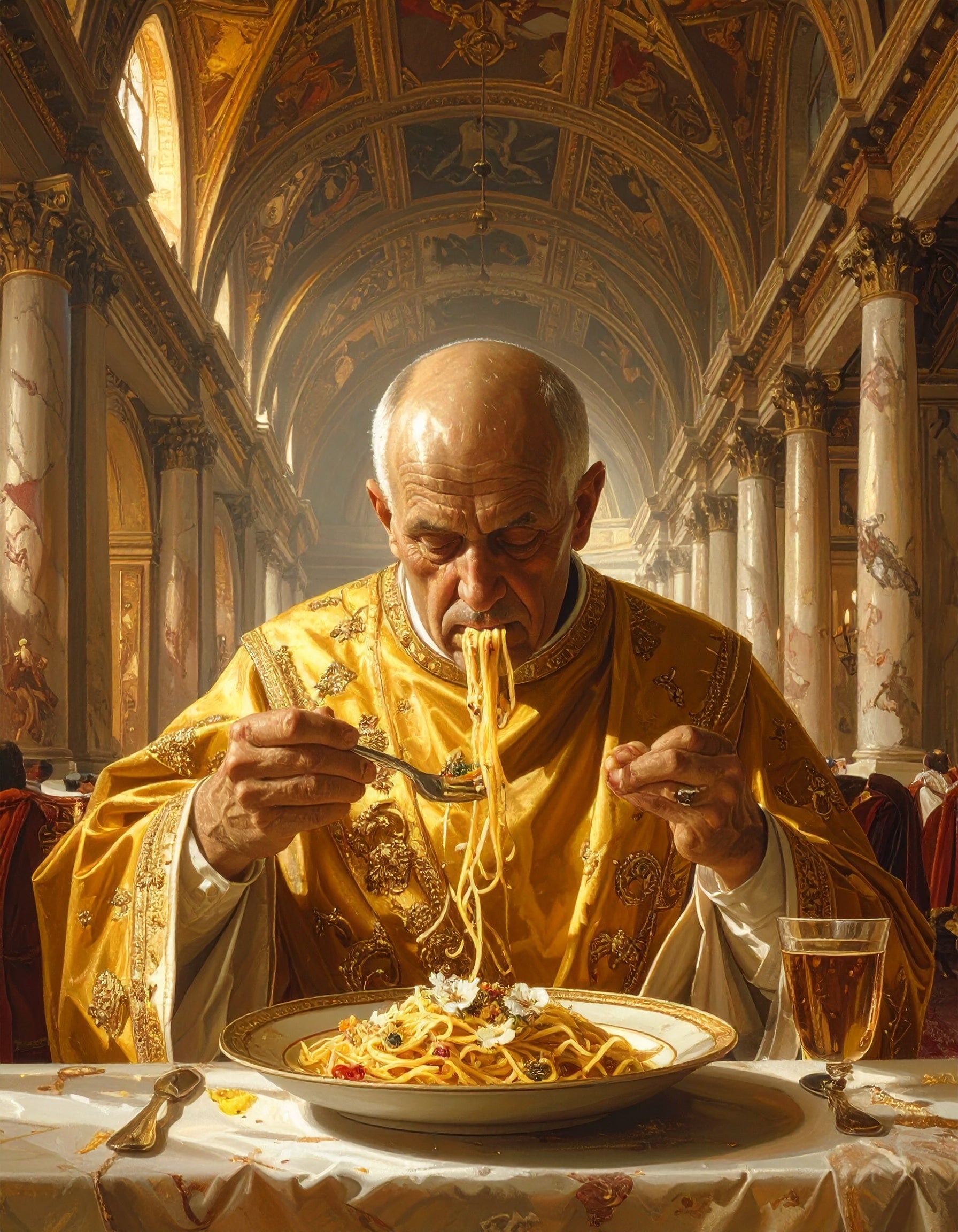
It’s easy to imagine the Popes floating above earthly desires, dining on theology and incense while angels plate their meals.
But the truth is far more delicious: the Vatican has always been a hungry place.
Behind those solemn frescoes lies a history of banquets, fasting loopholes, monastic soups, diplomatic lasagne, and more dried pasta than any reasonable religion should need. If Italian cuisine is a river, then the papacy was one of the first stones thrown into it — creating ripples that shaped how the country cooks.
This is the story of Popes and pasta: part holiness, part hypocrisy, part culinary genius.
 Where the Faithful Ate Before the Faithful Ate (The Monks Were First)
Before there were Popes, there were monks — and monks cooked like people who meant business.
After the fall of the Roman Empire, when feasts of flamingo tongues were replaced by survival-level eating, the real work of preserving culinary knowledge happened behind monastery walls.
In abbeys such as Farfa, Subiaco and Montecassino, men in wool robes quietly stabilised the future of Italian food.
They kept grain cultivation alive.
They pressed olive oil that tasted suspiciously like modern Sabina oil.
They tended herbs — mint, sage, savory, wild fennel — that would eventually perfume Roman pastas.
They copied manuscripts containing the earliest descriptions of lagane, the dough sheets later boiled with legumes: the proto-lasagne of central Italy.
This was the beginning: not glamorous, not indulgent, but foundational. Without monastic discipline, there would be no Roman cacio e pepe, no amatriciana, no carbonara.
Everything stable in Italian cuisine rests somewhere on a monastery table.
 The Renaissance: When the Vatican Became Europe’s Most Overqualified Restaurant
Jump ahead to the 15th and 16th centuries and Rome is no longer a quiet, shrinking city.
The Popes have reasserted power. Diplomats flood the Vatican. Artists fill the streets. And one thing becomes clear: Rome needs to feed people. A lot of people.
Enter the papal kitchens — the most ambitious culinary institution in Europe.
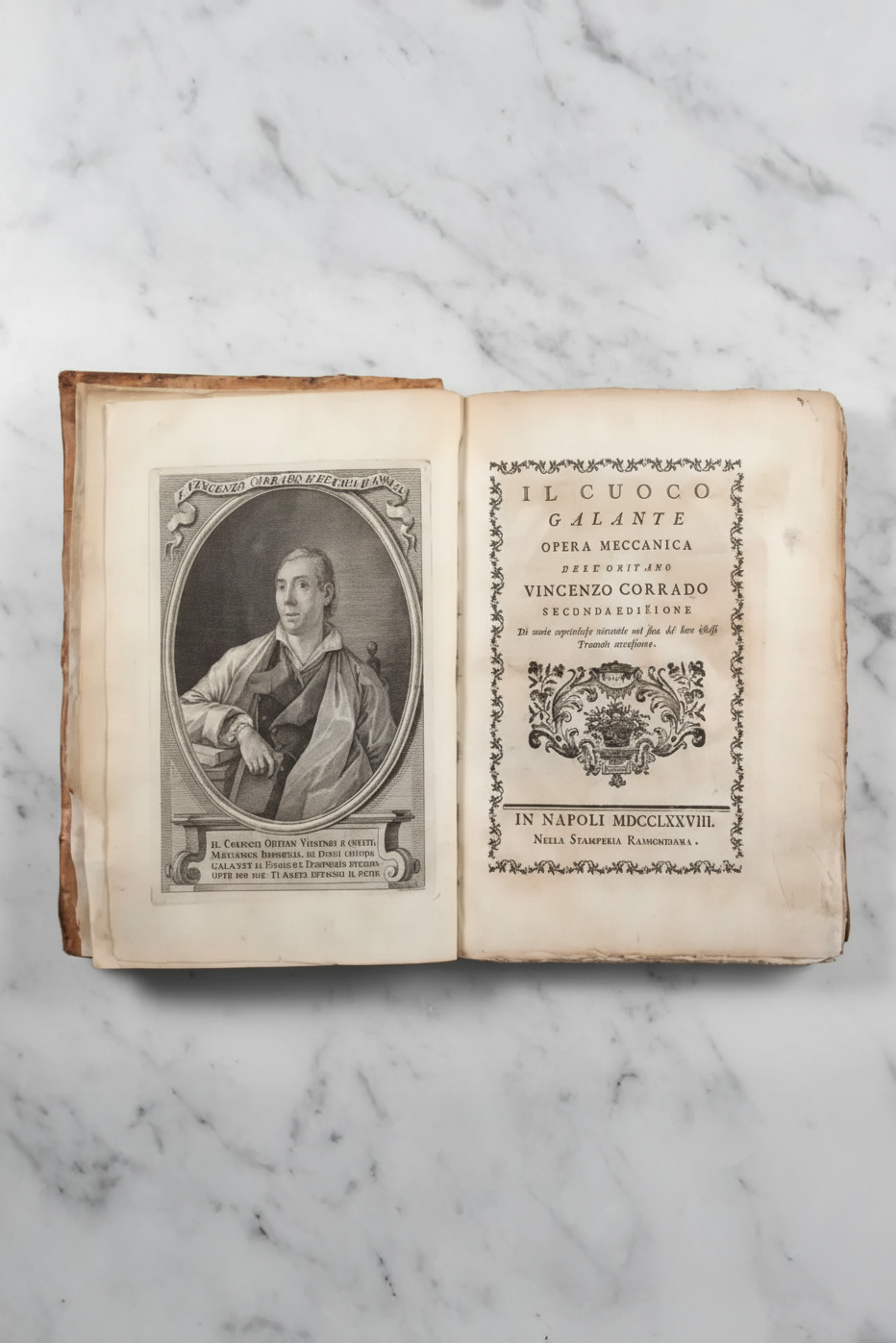
This was the era of Bartolomeo Scappi, personal chef to Pope Pius V.
Scappi wrote Opera dell’arte del cucinare in 1570, a six-book culinary tome that includes:
- stuffed pasta shapes
- flavoured doughs
- lasagne sheets
- vermicelli
- ravioli with herbs and cheese
- early gnocchi
- detailed advice on wheat varieties
- instructions for drying pasta for year-round use
If Italy has a culinary Bible, this is it.
And it was written inside the Vatican.
Scappi’s recipes show a cuisine that was at once decadent and surprisingly technical.
He instructs cooks to layer pasta with cheese and spices, to bind sauces with reduced broth, to perfume dishes with cinnamon and pepper.
Pasta wasn't humble yet — it was a diplomatic weapon.
A papal banquet wasn’t just a meal; it was a sermon in edible form.
Serving lasagne with cinnamon and sugar told foreign envoys:
“We’re powerful, cultured, and we’re not afraid of spices that cost more than a minor chapel.”
 The Politics of Noodles
The Popes used food the way modern politicians use photo ops.
Feast like a king → you look powerful.
Fast piously → you look holy.
Serve pasta innovatively → you look Roman.
Diplomatic logs from the 16th and 17th centuries show:
- ambassadors fed layered pasta with butter and cheese
- cardinals competing in pasta-filled banquets for influence
- visiting princes given “tria” (dried strips) as a prestige food
- Lent meals substituting meat with pasta-and-herb dishes
The message was clear: Rome ruled stomachs as confidently as it ruled souls.
Fasting, Loopholes, and the Rise of Non-Meat Pasta
Here’s the delicious irony:
Church rules forbidding meat on Fridays, Lent, vigils, and countless holy days expanded the pasta repertoire.
Papal kitchens had to satisfy important guests without breaking dietary law.
This created demand for:
- herb-based pastas (parsley, mint, marjoram, wild fennel)
- cacio e pepe-style dishes using aged cheeses and pepper
- pasta in brodo, often with vermicelli
- pasta with fish sauces — some of which prefigure puttanesca
- legume pastas, precursors to modern pasta e ceci
When you can’t use meat, you get creative.
In this way, Catholic fasting rules quietly wrote half the Roman pasta canon.
The Vatican’s Pasta Industry Before Pasta Had an Industry
By the early 1500s, the Vatican had become one of the largest institutional consumers of pasta in Europe. This isn’t food lore — it’s in procurement registers.
The papal household purchased:
- huge quantities of vermicelli
- “lasagne sheets”
- “tria longa” (long dried strips)
- ravioli fillings by the bucket
- and enough cheese to powder an entire continent
This steady demand created early pressure on Roman pasta makers.
It’s not an exaggeration to say that papal consumption helped normalise dried pasta production around Rome well before Italian unification and long before pasta industrialisation truly took off in Naples.
Rome was already hungry; the Popes made it strategic.
Popes With Pasta Opinions (Because of Course They Had Them)
Contrary to popular belief, Popes ate very differently depending on personality and political climate.
A few well-documented examples:
Pope Martin V (1417–1431)
Preferred soft, thin pastas “lightened with herbs” — the medieval equivalent of “I’ll have the salad but make it comforting.”
Pope Clement VII (1523–1534)
A fan of lighter dishes during Lent; indicated preference for broths, soups and simple wheaten pastes.
Pope Pius IX (1846–1878)
Legendarily loved maccheroni in brodo, essentially the Victorian comfort dish of Rome.
Visitors described him as “cheerful, fond of simple pastas, and fond of second portions.”
Pope Leo XIII (1878–1903)
Served guests pasta frequently in the papal apartments.
Hosts recorded simple but elegant dishes: lasagnette with cheese, vermicelli with herbs.
Not gluttony — just very Roman taste.
“Maccheroni alla Papalina”: The Not-Carbonara Ancestor
There’s a modern Roman dish called alla papalina — usually prosciutto, peas, egg, pecorino.
That’s not the original.
Older 19th-century “papalina” dishes served inside Vatican quarters were closer to:
- softened cured pork (often cured cheek)
- egg yolk
- cheese
- pepper
- pasta ribbons
A proto-carbonara.
No cream. No peas. No nonsense.
It wasn’t invented for a specific Pope, but it circulated among papal staff and clerical households. The name stuck.
How Napoleonic Troops Nearly Ended Papal Pasta
When Napoleon occupied Rome (1798, 1809), one of the first things his administration did was seize grain stores and interrupt supply lines.
Pasta prices doubled.
Street vendors complained first; Vatican kitchens soon followed.
During these years, Romans — including Vatican workers — turned more toward:
- legumes
- offal
- dried pork
- preserved vegetables
In other words: the exact ingredients that later formed the backbone of cucina romana.
History changes cooking when it’s hungry.
Industrialisation, Tourism, and the Modern Papal Plate
By the late 1800s, Rome began industrial pasta production.
The legendary Pantanella factory, founded in 1868, became one of Italy’s biggest.
The Vatican had reliable suppliers, and pasta became democratised across the city.
Meanwhile, foreign visitors — writers, diplomats, curious pilgrims — began describing papal meals with surprising fascination:
- vermicelli with cheese served to visiting French clergy
- simple ravioli with herbs for diplomatic lunches
- friar-cooked soups thickened with pasta scraps
- gnocchi served in seminaries every Thursday (“Gnocchi Thursday” still exists in Rome today)
The Popes didn’t create Italian pasta culture, but they fed it.
Literally.
And Today? The Vatican Still Runs on Pasta.
The modern Vatican is small, but it feeds around 2,000 people a day: Swiss Guards, staff, clergy, residents.
Typical meals?
Exactly what you’d expect from the world’s most Roman micro-state:
- rigatoni with tomato
- penne with tuna and capers
- spaghetti aglio olio
- gnocchi on Thursdays
- fettuccine on feast days
- soups thickened with pasta on cold days
Nothing trendy.
Nothing over-thought.
Just good, honest, deeply Roman cooking.
Because some traditions don’t need miracles — just boiling water and salt.
Closing: The Sacred and the Saucy
The story of Popes and pasta is not about indulgence or holiness.
It’s about continuity: a civilisation that cooked its way through war, plague, reformations, artistic explosions, and diplomatic drama — always returning to wheat, water, salt, and cheese as if they were scripture.
Monks preserved the knowledge.
Papal chefs refined it.
Vatican banquets broadcast it.
Roman home cooks perfected it.
And now, centuries later, the same flavours show up in every trattoria from Trastevere to Tokyo.
If bread is the body of Italy, pasta is its spirit —
and for better or worse, the Popes were among its earliest evangelists.
In Rome, faith is optional.
Pasta is mandatory.