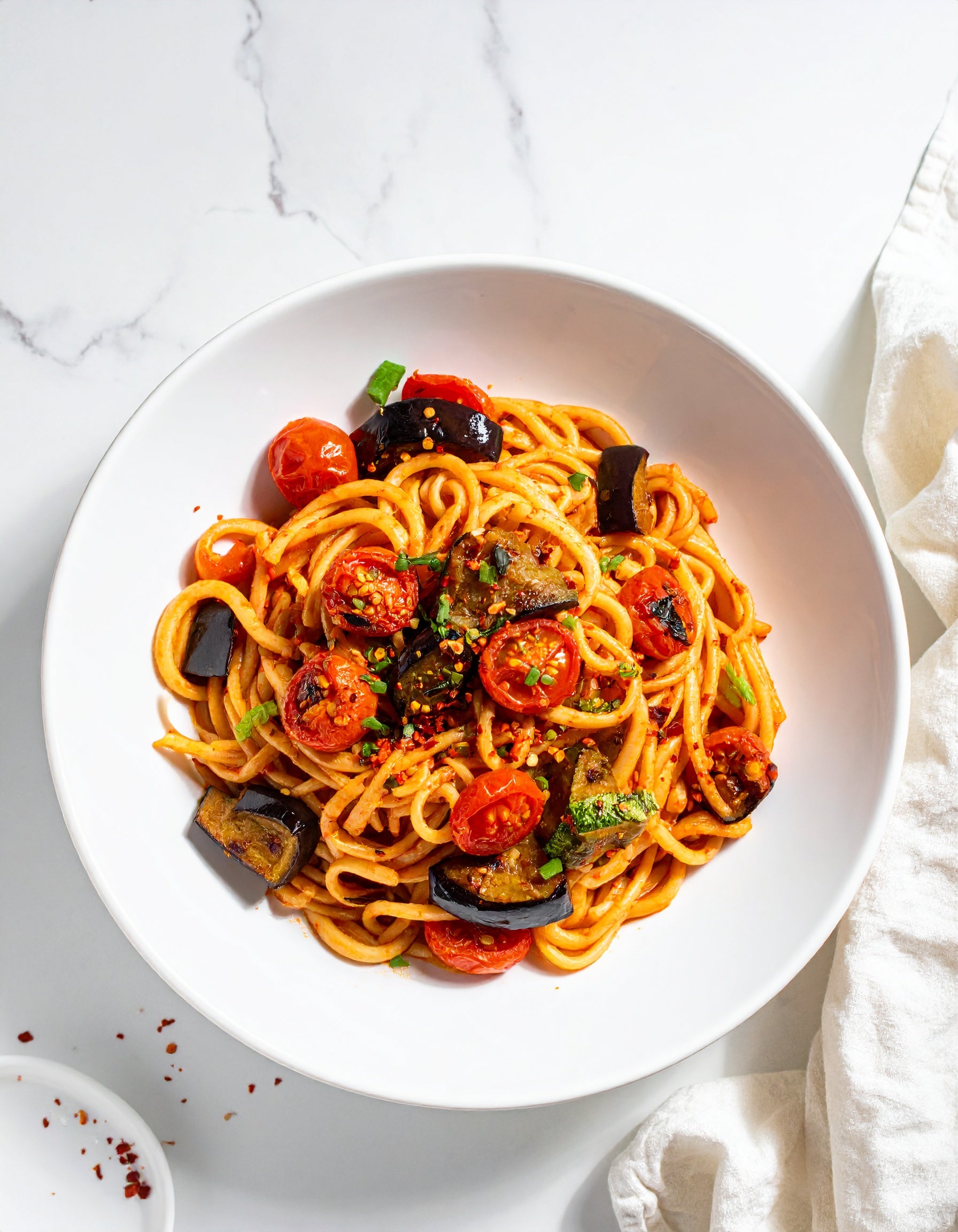
Shapes: Maltagliati — Tuscany’s Beautiful Accidents

Some pasta shapes were born from tools.
Some were born from rituals.
Maltagliati were born from human error — and Italy never lets a good mistake go to waste.
“Maltagliati” literally means “badly cut,” a name given with the kind of dry, affectionate sarcasm that only Italian kitchens can pull off. What began as scraps on the cutting board became one of the most expressive, personality-rich shapes in the Tuscan canon.
This is pasta that celebrates the imperfect. Pasta that embraces chaos. Pasta that reminds you that cooking is more gesture than geometry.
Maltagliati are the moment when a Tuscan grandmother shrugs, says “they’ll be fine,” and is proved absolutely right.
Origins — Waste Not, Want Not
Historically, maltagliati were never planned. They were the offcuts from making large, elegant pieces like:
- lasagne sheets
- tagliatelle
- pappardelle
When cooks trimmed their dough sheets to even out edges, the leftover bits — triangles, shards, odd scraps — fell aside. And because nothing edible was ever wasted in rural Tuscany, those scraps found their way into boiling pots of bean soup or vegetable broth.
What started as a salvage operation evolved into a tradition.
Over decades, then centuries, maltagliati shifted from “accidental pasta” to “intentional pasta.” People began rolling them on purpose, celebrating their randomness instead of apologising for it.
They represent a kind of culinary worldview:
use everything, enjoy everything, waste nothing.
This isn’t the cuisine of scarcity — this is the cuisine of intelligence.
More History — The Shape of Rural Life
In old Tuscan farmhouses, pasta-making wasn’t a glamorous act. It was weekly labour, built around what households had:
- flour milled locally
- eggs from the courtyard
- water from the village well
- a table big enough for a family to gather around
The scraps from pasta-making were never seen as inferior. They were seen as generous — a bonus meal, a way to stretch sustenance, a chance for children to practice cutting shapes without consequences.
In the Middle Ages, long before extruders and bronze dies, maltagliati appeared in cookbooks as part of humble soups served to labourers and pilgrims. Their irregularity made them ideal in broth: edges softened at different rates, giving each spoonful a slightly different feel.
By the Renaissance, maltagliati were eating well in both poor and noble homes. Wealthier families seasoned them with fine pecorino and spices; poor families used olive oil and beans. But the shape remained democratically irregular.
In Tuscany, irregularity was not a flaw.
It was honesty.
Geometry Without Geometry
There is no strict shape for maltagliati. No templates. No rulers.
You cut them however the mood strikes:
- triangles
- diamonds
- rhombuses
- trapezoids
- slender strips
- chunky strips
- random geometry that would alarm a mathematician
Tuscan grandmothers say:
“If the pieces are too perfect, you’ve done it wrong.”
The whole point is the casualness, the freedom, the anti-perfectionist rebellion. A bowl of maltagliati should look like a crowd of individual citizens — uneven, imperfect, and harmonising anyway.
The shape’s identity is its lack of identity.
Why Maltagliati Matter in Tuscan Cuisine
Maltagliati were the pasta of:
- farm kitchens where cuts were practical, not aesthetic
- flour-dusted children learning to wield knives
- mill workers who lived by seasons and storerooms
- home cooks stretching food between paydays
- families feeding many mouths with limited means
They represent what Tuscany does best:
frugality without sadness, thrift without compromise, simplicity elevated through intention.
Not poor cuisine — wise cuisine.
Cuisine that sees potential everywhere.
Textures — Soft, Tender, and Generous
Because maltagliati often come from mixed doughs — farro, semola, wheat, even chestnut flour in mountain areas — they can vary beautifully in texture:
- tender edges
- slightly chewy centres
- porous surfaces that hold sauce
- unpredictable thicknesses that make each bite unique
The charm of maltagliati is their generosity:
- they drink broth
- they cling to bean purées
- they hold up in stews
- they embrace ragùs with a wide, welcoming surface
Nothing slides off maltagliati.
Everything stays.
Classic Pairings — The Soups and Sauces They Made Famous
1. Tuscan Pasta e Fagioli
Not the Venetian cream-soup version.
The Tuscan one is more:
- olive oil
- rosemary
- whole beans
- body
- warmth
Maltagliati add heft, substance, and personality.
2. Maltagliati al sugo finto
A vegetable ragù pretending to be meat — a masterpiece of cucina povera.
3. Maltagliati with porcini
Earth meeting earth.
4. Maltagliati with chickpeas and garlic
A dish so comforting it should come with a blanket.
5. Maltagliati in rabbit stew
Not as common today, but historically iconic.
Soft pasta in rich game broth — pure rural elegance.
Maltagliati Today — The Rise of Imperfection
In a world where food is filtered, curated, polished, and photographed before it’s eaten, maltagliati feel like a rebellious breath of fresh air.
Chefs love them because:
- they look handmade
- they add visual character to the plate
- they communicate heritage without clichés
- they align with sustainability and zero-waste values
- they remind diners that cooking is human, not industrial
Maltagliati are the pasta equivalent of jazz:
structured enough to make sense, free enough to feel alive.
Fun Facts — The Accidental Lore Behind Maltagliati
-
In medieval kitchens, maltagliati were literally swept off the table and cooked.
Hygiene was… imaginative. -
Tuscan children traditionally learned knife skills by cutting maltagliati.
Symmetry was discouraged. -
Some villages believe the more irregular the shape, the more luck the pasta brings.
Perfect squares are considered “soulless.” -
In earlier centuries, maltagliati were the pasta for pilgrims walking the Via Francigena.
Cheap, filling, indestructible. -
In Florence, the shape was sometimes called “stracci” — rags.
A compliment, not an insult. - During lean years, maltagliati were served at weddings because they symbolised abundance created from little.
- The oldest known recipe using maltagliati appears in 1400s Tuscan cooking manuscripts — long before many famous shapes existed.
-
Some modern chefs create luxury maltagliati using truffle dough or saffron dough.
Grandmothers disapprove on principle. - In certain villages, there’s a game called “indovina la forma” — guess the shape — played at the table during maltagliati dinners.
-
Many nonnas insist maltagliati taste better when cut with a slightly dull knife.
“Sharper knives make arrogant pasta,” they say.