Shapes: Lombrichelli — The Earth’s Rope from Tuscia
The Taste of the Land, Rolled by Hand
If Rome is a feast of marble and noise, northern Lazio — the ancient land of Tuscia — speaks in whispers.
Here, hills roll like sleeping giants, woods smell of chestnut and rain, and pasta takes the shape of the earth itself: coarse, handmade, and stubbornly real. Among the region’s quiet treasures is a pasta as rustic as the soil it comes from — Lombrichelli, the “little earthworms” of Viterbo and the Cimini hills.
The name might raise eyebrows, but for locals it’s a badge of honesty. In a region of volcanic soil and oak forests, lombrichi (earthworms) are symbols of fertility and life. The shape imitates their humble beauty — long, irregular ropes of dough, rough to the touch and wriggling with character.
Lombrichelli are the soul of Tuscia: unrefined, generous, shaped not by machines but by palms that know the rhythm of work. To eat them is to taste the land.
Where the Etruscans Left Their Appetite
Long before Rome was Rome, this was Etruscan country — a civilisation that turned volcanic soil into wealth and ritual. In the tomb paintings of Tarquinia, banquets sprawl across walls: dancers, musicians, bowls of grain. Archaeologists have found early grinders and rolling pins that suggest the Etruscans already shaped dough into primitive pasta-like strands.
Lombrichelli are heirs to that lineage. Their simplicity — flour, water, salt — is ancient. Their texture recalls early “lagane,” the ancestor of all Italian pasta, which Etruscans boiled with legumes and herbs. The technique survived through the centuries, passed from monasteries to farmhouses, evolving into the rope-shaped doughs of central Italy: Tuscany’s pici, Umbria’s umbricelli, and Lazio’s own lombrichelli.
Each region claims subtle superiority. Tuscia’s version is denser and slightly shorter, rolled thicker and left uneven — a farmer’s signature in each twist.
The Shape of Work
Making lombrichelli isn’t about perfection; it’s about rhythm. The dough is kneaded only with water and flour, usually a blend of farina di grano tenero (soft wheat) and semola di grano duro (durum wheat semolina). No eggs — those were precious once, reserved for feasts. The result is a rough, elastic dough that holds its form without luxury.
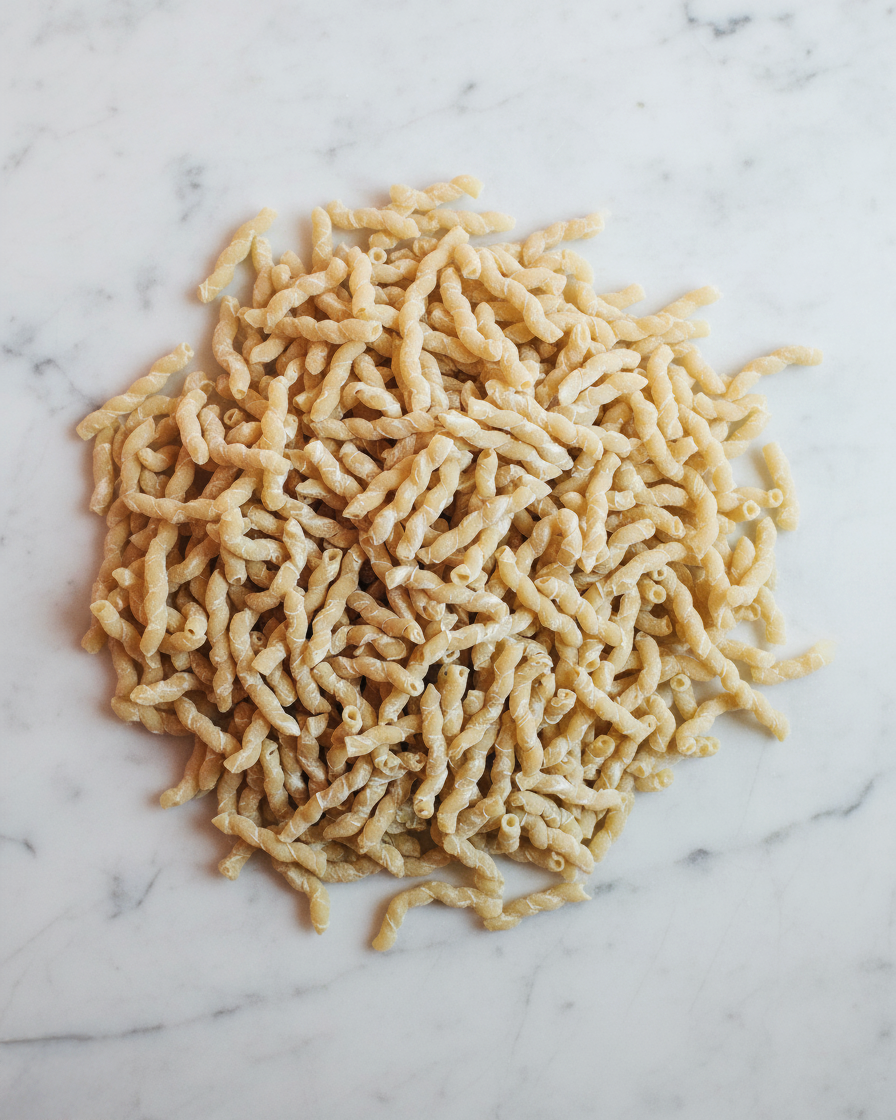
Once rested, it’s cut into small chunks and rolled by hand against a wooden board. Each piece lengthens under the palm until it becomes a rustic cord about the width of a matchstick — slightly thicker than spaghetti, thinner than pici. No two strands are identical.
Locals say the secret lies in the pressure of the hand — “né troppo, né poco” — not too much, not too little. The dough should squeak faintly under your skin, leaving a dusting of flour and satisfaction.
When you make a plate for six, you’ll roll for nearly half an hour. It’s meditative work, like kneading bread or tilling soil. The pasta looks alive — the little “worms” glistening in semolina dust, waiting for the pot.
Boiling the Earth
Unlike egg-based pastas, lombrichelli are firm and resilient. They need vigorous boiling — at least ten minutes — in heavily salted water. As they cook, the flour releases a fine cloud of starch, thickening the water like a broth.
Roman cooks call this l’acqua magica, the magic water — the foundation for the sauce. When ladled back into the pan, it turns oil and tomato into silk. Without it, the dish is naked; with it, it sings.
When drained, lombrichelli have a spring unlike any other pasta. Bite them, and you feel the resistance — a chew that’s muscular but forgiving, like bread crust. This is what makes them the perfect partner for Tuscia’s sauces: hearty, oily, wild.
Sauces of the Woods and Hills
Every village in northern Lazio has its own way of dressing lombrichelli, but three traditions dominate.
-
Lombrichelli all’Aglione e Pomodoro
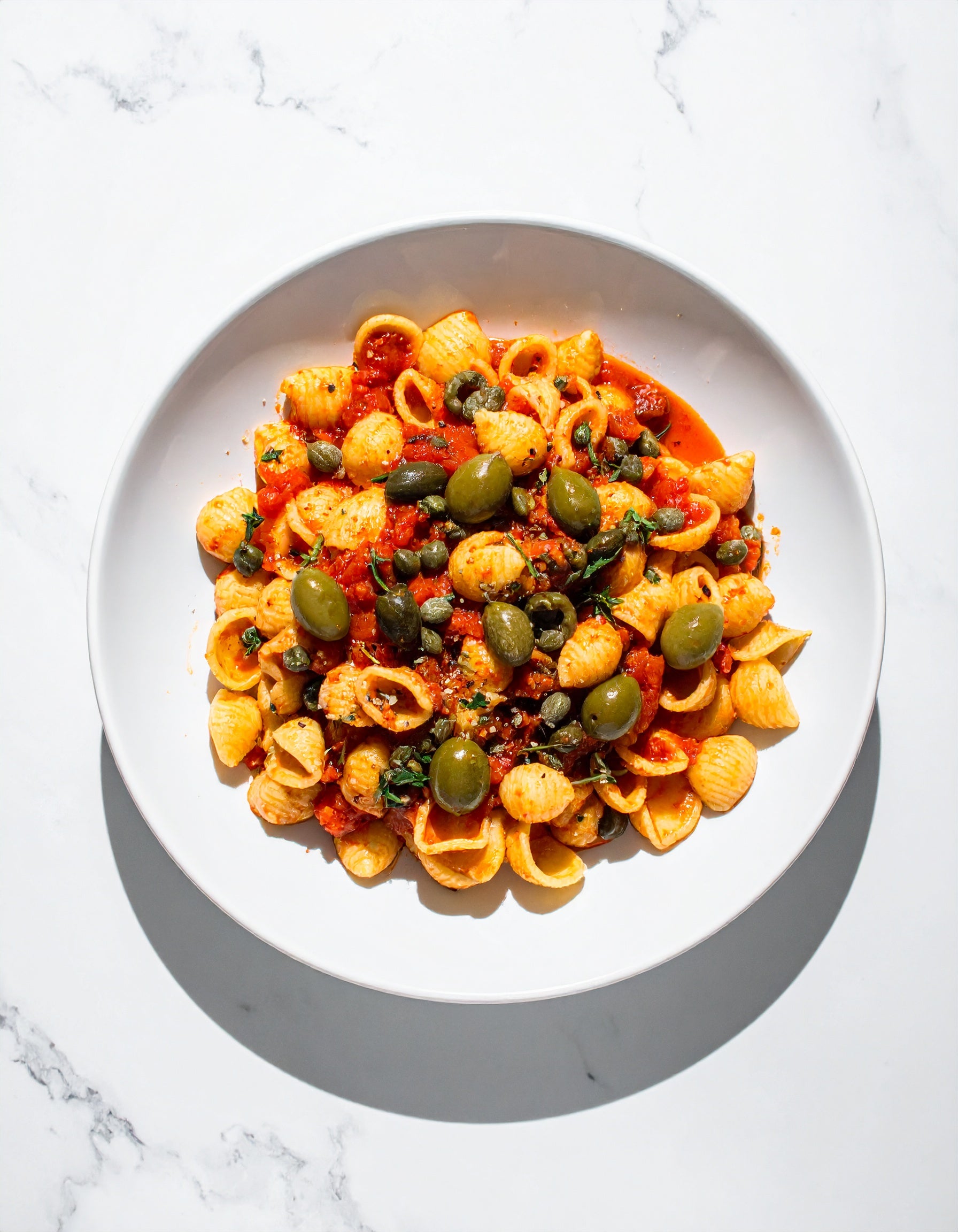
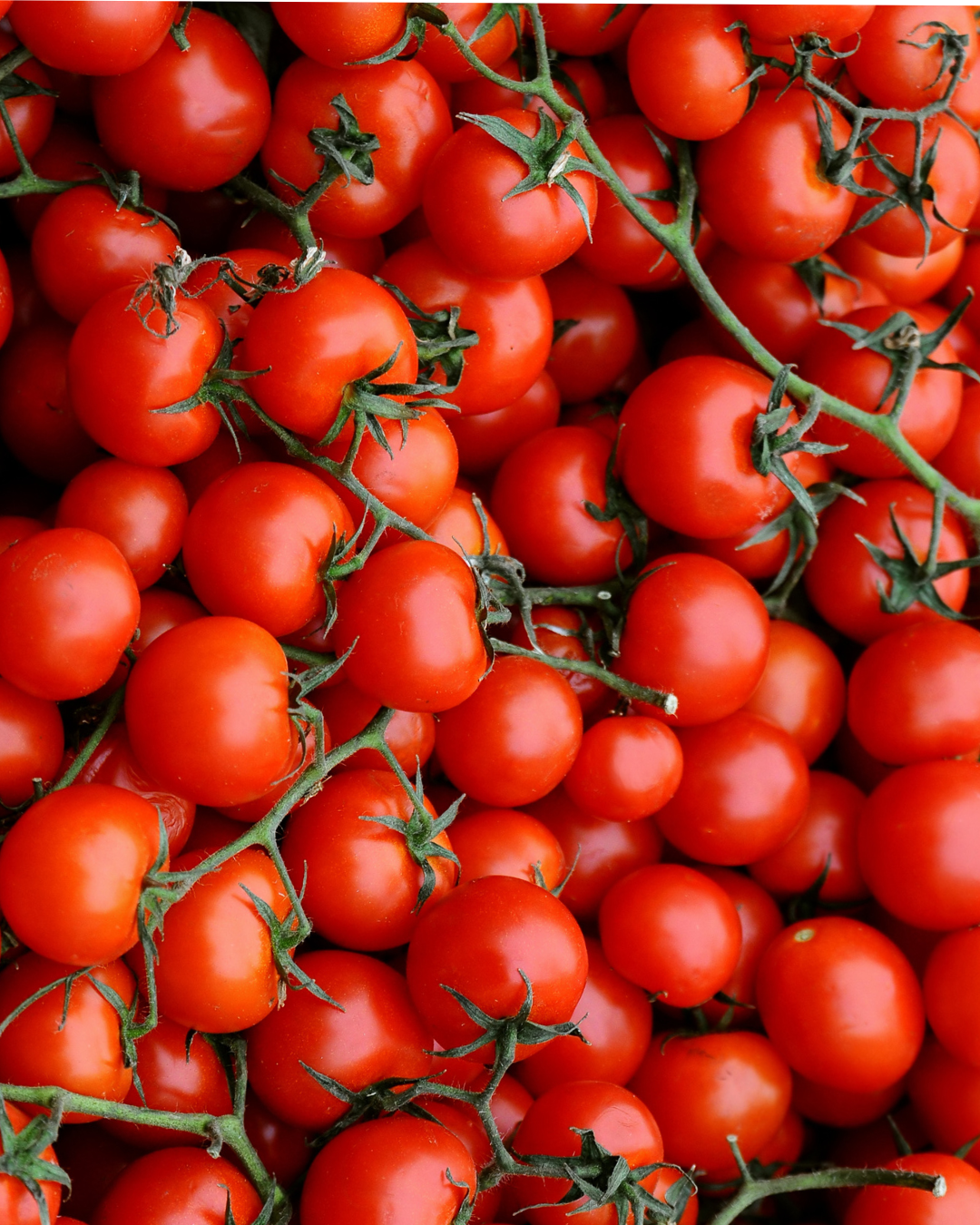
A humble sauce of garlic, tomato, and chili, sometimes with a touch of anchovy for depth. This version, borrowed from nearby Tuscany, is a weekday staple — fiery, honest, cheap. The garlic melts slowly into oil until fragrant but never burnt, then meets sweet tomato pulp. The lombrichelli absorb every drop like sponges. -
Lombrichelli alla Viterbese
The classic from Viterbo, the medieval hill town that once hosted popes. Here, cooks add acciughe (anchovies), pangrattato (toasted breadcrumbs), and nocciole (hazelnuts) — the pride of the Cimini hills. The nuts lend a faint sweetness, the anchovies a whisper of sea, bridging the landlocked hills with the nearby Tyrrhenian coast. -
Lombrichelli al Sugo di Lepre or Cinghiale
In autumn, when the woods fill with hunters, game sauces take over. Hare (lepre) or wild boar (cinghiale) is marinated in wine, herbs, and juniper, then simmered for hours until tender. The meat’s richness clings to the rough pasta like a story told slowly.
Other versions follow the rhythm of the seasons — artichoke and mint in spring, porcini and chestnut in fall, chickpeas and rosemary in winter. Always local, always logical. The sauce is never just accompaniment; it’s an extension of the land.
A Geography of Wheat and Water
Lombrichelli’s identity is inseparable from the territory that made them possible. The volcanic fields around Viterbo and Montefiascone yield some of Italy’s best durum wheat, enriched by minerals from ancient eruptions. The region’s spring water — especially from Lake Bolsena — has a softness that makes the dough supple.
Even the air plays a role. Dry winds from the Maremma coast ensure pasta can be hung to rest without cracking, a vital step before boiling. This natural harmony between grain, water, and climate shaped Tuscia’s culinary rhythm long before recipes were written.
Locals say you can tell the altitude by how the pasta behaves: near the coast, it stays pale and silky; up in the hills, it turns slightly gray, with a nutty aroma. Nature imprints itself in each strand.
The Social Life of a Dish
In Tuscia, lombrichelli are more than food; they’re social glue. Making them is often a communal act — families gather on Sundays around flour-dusted tables, chatting as they roll. In small towns like Blera, Sutri, and Capranica, “feste della pasta” celebrate the shape each summer. Women in aprons sit under tents, rolling lombrichelli to feed hundreds.
During the Sagra degli Gnocchi in Vasanello, locals often sneak in a day for lombrichelli too — a reminder that while gnocchi might travel well, these hand-rolled ropes belong to home. There’s no shortcut, no industrial version that feels right. As one nonna told The Pasta Project:
“You can buy many things in life, but not the warmth of your own hands in dough.”
From Peasant Bowl to Chef’s Plate
For centuries, lombrichelli stayed in the shadows of Roman and Neapolitan pasta fame. But in the last decade, a quiet revival has begun. Chefs seeking authenticity have rediscovered the beauty of simplicity.
At I Giardini di Ararat near Viterbo, chef Chiara Cianchetta serves lombrichelli con funghi porcini e nocciole, using only local ingredients gathered within 20 kilometers.
At La Parolina, the Michelin-starred restaurant in Trevinano (on the Lazio-Tuscany border), chef Iside De Cesare transforms them into fine dining: hand-rolled lombrichelli with pheasant ragù and truffle dust.
Even in Rome, trattorie like Trattoria del Cimino dal 1895 in Caprarola champion the dish as a symbol of Lazio’s countryside soul.
Each reinterpretation keeps one rule: never industrialize the shape. Machine-extruded versions exist, but they lack the irregular texture — and therefore the soul — of the handmade rope.
The Texture of Memory
Food historian Oretta Zanini De Vita once wrote that “pasta is the autobiography of a people.” Lombrichelli, in that sense, are Tuscia’s autobiography — slow, earthy, modest, self-sufficient.
When you roll them, you feel time stretch. Each strand is a gesture passed down from mother to daughter, farmer to cook. The rhythm of the palms mimics the rhythm of the plow, the same movement that tills soil and kneads dough. It’s work that blurs into meditation.
The flavor, too, tells its story: slightly coarse, faintly wheaty, with a bite that speaks of self-reliance. In every chew, you can taste the absence of luxury — and the pride that comes with it.
Science of the Rope
From a technical point of view, lombrichelli are fascinating. Because they lack egg, their gluten network forms purely through mechanical kneading. The extended rolling aligns gluten strands along the pasta’s length, creating remarkable tensile strength. That’s why they can be so thick without breaking — the same principle that gives hand-pulled noodles in Asia their elasticity.
Their surface, roughened by hand-rolling, has microscopic grooves that trap starch water and oil. When tossed with sauce, these grooves form a natural emulsion, thickening without cream. It’s culinary engineering disguised as simplicity.
Cultural Echoes
- In Viterbo dialect, to say “sei un lombrichello” means “you’re stubborn but good-hearted.”
- The pasta’s first literary mention appears in an 18th-century letter from a Papal envoy describing a meal “di lombrichelle e fave fresche.”
- Some cooks still roll them on woven reed mats instead of wood, imprinting delicate patterns onto the surface — a lost art.
- In nearby Umbria, monks once used lombrichelli-style dough as a Lenten meal: plain flour and water, eaten with oil and pepper to practice humility.
- During World War II, when eggs and meat were scarce, lombrichelli returned to every table — proof that poverty can still taste of comfort.
Where to Find Them
- Trattoria del Cimino dal 1895 (Caprarola) — the benchmark for lombrichelli alla Viterbese.
- I Giardini di Ararat (Bagnaia, Viterbo) — farm-to-table lombrichelli with wild mushrooms.
- La Parolina (Trevinano) — fine-dining interpretation with game ragù.
- Agriturismo Il Romitorio (Tuscania) — handmade lombrichelli tossed in olive oil from their own groves.
- Osteria Belvedere (Montefiascone) — overlooking Lake Bolsena, serving a seaside version with anchovy and lemon zest.
Fun Facts & Local Wit
- No two nonnas agree on the right thickness. In some towns, it’s as wide as a pencil; in others, as thin as shoelace. Each claims authenticity.
- Some say the best way to test readiness is to fling one strand at a tiled wall — if it sticks, it’s done.
- A local proverb warns: “Chi arrotola male, mangia solo.” (“Those who roll badly, eat alone.”) It’s half-joke, half-warning.
- In modern Viterbo supermarkets, you can sometimes find vacuum-packed “lombrichelli” made by small family labs — a nod to tradition for those without time to roll.
- In spring festivals, children compete to see who can make the longest unbroken lombrichello. The record stands at nearly two meters.
The Philosophy of Simplicity
In a world of foams and reductions, lombrichelli remind us that cuisine began with flour and hands. They teach humility — that the measure of a cook is not invention, but attention.
To roll a perfect lombrichello, you must feel the dough breathe under your palms. You must sense when it resists, when it yields, when it’s ready. That’s not a recipe; it’s empathy.
Maybe that’s why the shape endures. In an age of speed, it forces slowness. In a culture of spectacle, it celebrates the unseen.
Eat them in silence once — no chatter, no phone — and you’ll taste something ancient: the continuity between body and land.
Closing — The Rope of Continuity
Lombrichelli are the thread between centuries, the edible handwriting of a region that never stopped believing in the power of hands. They may look humble, but each strand carries a lineage older than Rome itself — a memory of Etruscan hearths, of popes dining in exile, of farmers who rolled their hunger into sustenance.
To eat them is to understand Lazio beyond its capital — to hear the quiet music of Tuscia, where earthworms till the soil and humans imitate them in gratitude.
In a world obsessed with polish, lombrichelli remain gloriously rough.
Because sometimes, the truest expression of love isn’t smooth — it’s handmade.