Shape: Ciriole
 What Ciriole Is
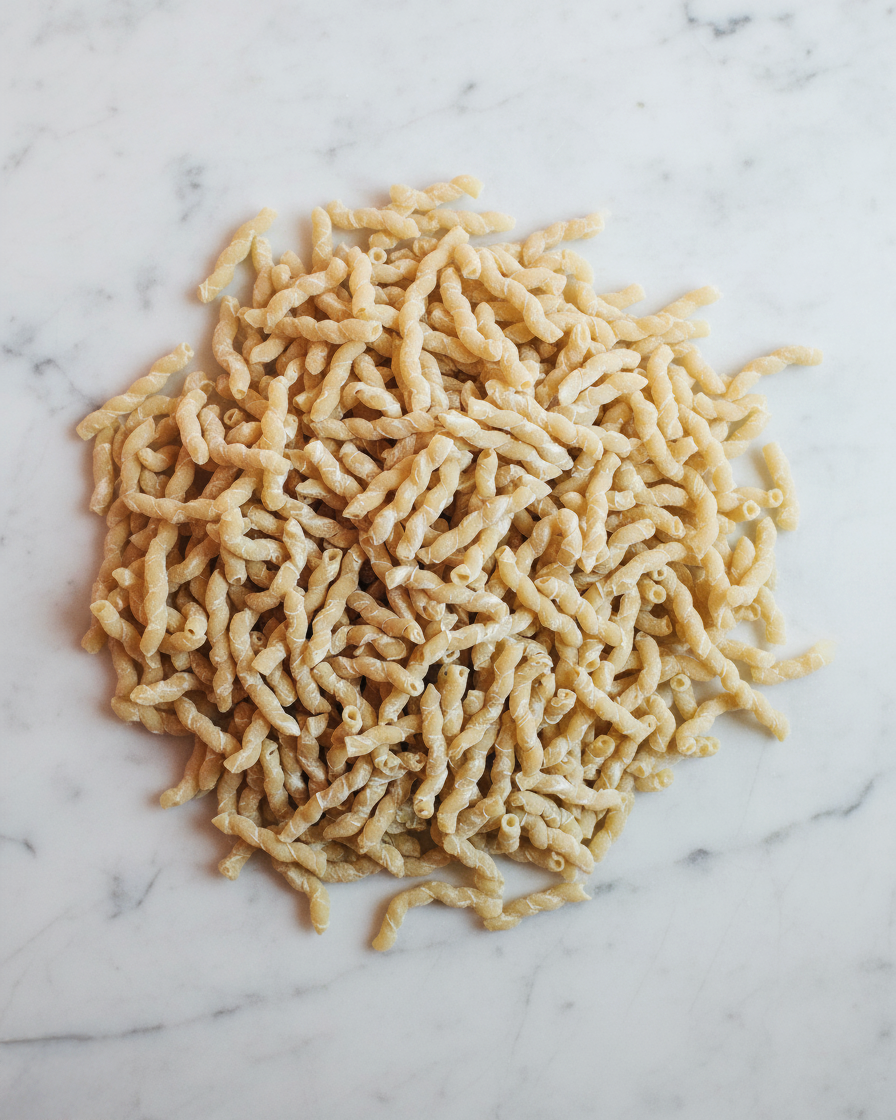
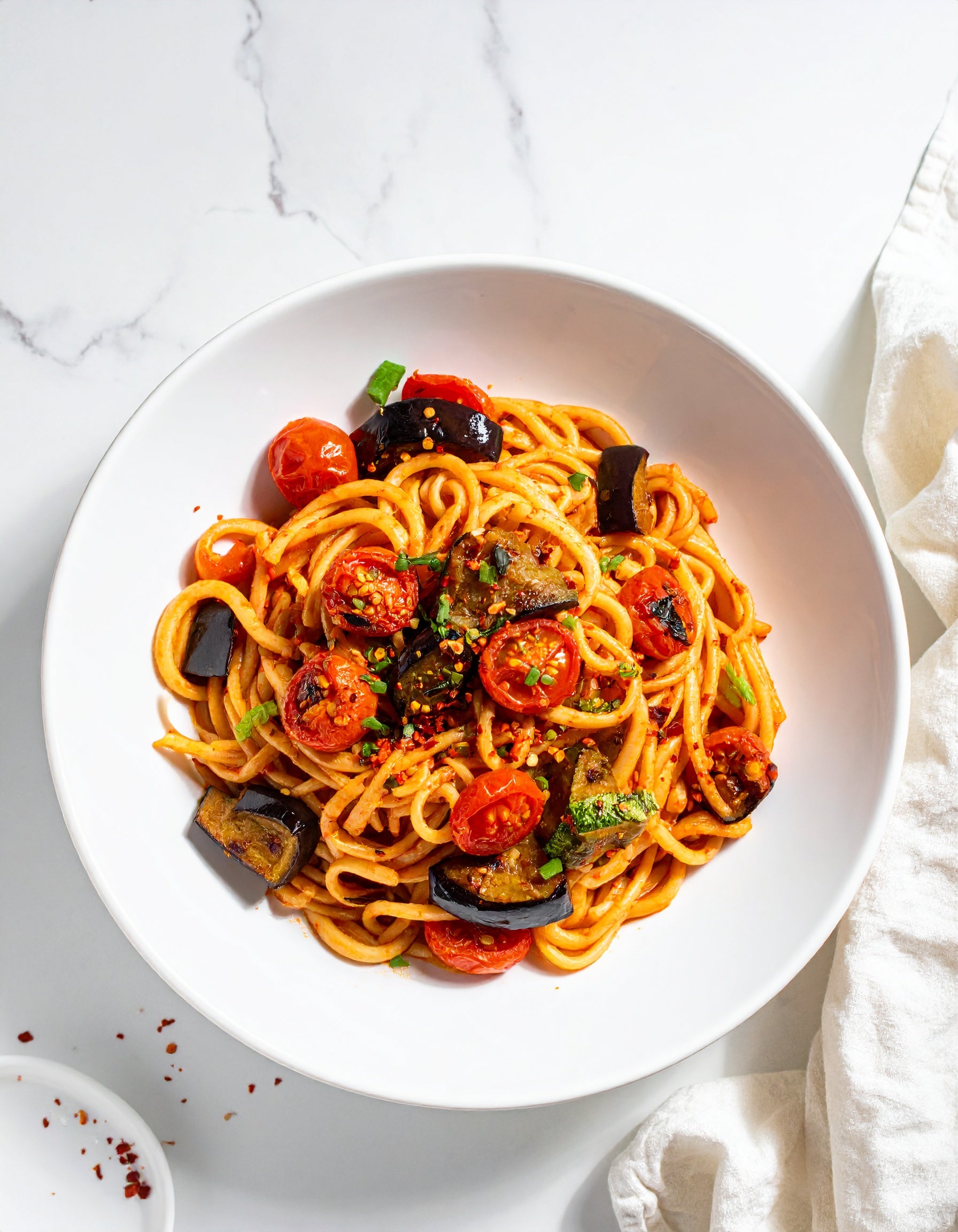
Ciriole is a long, thick, water-only pasta, blunt in shape and deliberately irregular. It resembles a rough, squared spaghetti, though thicker and less uniform, formed by hand rather than extrusion.
There are no eggs in traditional ciriole dough. Just flour, water, and salt. That simplicity is not ideological; it is practical. Ciriole belongs to a context where pasta had to be made quickly, cheaply, and reliably, without relying on animal products.
The shape is modest, almost austere. Its identity lies in resistance — to breaking, to overcooking, and to refinement.
Geography and Border Identity
Ciriole is most closely associated with southern Umbria, particularly the area around Terni, a city whose history and geography place it in constant dialogue with Lazio.
This matters. Terni has long been more industrial, more connected, and more outward-facing than much of Umbria. Routes toward Rome passed nearby, and cultural exchange was inevitable. Ciriole reflects this condition: it sits between Umbrian inland logic and Roman water-pasta traditions.
Yet it is not Roman pasta transplanted wholesale. Ciriole remains thicker, rougher, and more stubborn than its Lazio counterparts. It absorbs influence without surrendering structure.
Historical Origins
Ciriole likely descends from early flour-and-water doughs developed before egg enrichment became widespread inland. These doughs were easy to prepare, required no animal resources, and could be produced daily in households with limited means.
Unlike courtly or urban pasta traditions, ciriole was never codified or standardised. Its shape emerged from manual stretching and cutting, guided by habit rather than measurement.
Documentation is sparse, which is typical for everyday foods. Ciriole did not enter history books because it never needed to. It existed because it worked.
Ciriole in Umbrian Pasta Culture
Ciriole occupies a specific role within Umbrian pasta culture.
It is:
- Less rich than egg-based shapes
- More neutral in flavour
- Highly compatible with assertive sauces
Its water-only structure allows it to act as a carrier rather than a contributor. In Umbrian contexts, this neutrality is not a weakness. It allows modest ingredients to speak clearly and prevents excess.
Ciriole’s thickness is essential. Thinner forms would collapse under the sauces traditionally paired with it. Thicker forms would become heavy. Ciriole finds the minimum viable structure — a recurring Umbrian trait.
Relationship to Other Regional Shapes
Ciriole often invites comparison, but those comparisons clarify rather than dilute its identity.
- Compared to Roman tonnarelli: ciriole is less regular, less dense, and more rustic
- Compared to strangozzi: ciriole is rounder, smoother, and more neutral
- Compared to spaghetti: ciriole rejects thinness and standardisation entirely
Ciriole sits at a crossroads, but it does not dissolve into hybridity. Its Umbrian version remains rooted in domestic cooking and inland restraint.
Ciriole Today
Ciriole remains strongly tied to local cooking in and around Terni.
It appears:
- In home kitchens
- In trattorias serving traditional food
- Occasionally as fresh pasta sold locally
It is rarely industrialised and even more rarely exported. Outside its home territory, it is often replaced by more familiar shapes, or misunderstood as simply “thick spaghetti.”
This limited diffusion is not accidental. Ciriole depends on context — cultural, historical, and practical. Without that context, it loses meaning.
Cultural Notes and Perspective
Ciriole is often overlooked precisely because it lacks a strong narrative hook. There is no mythology, no iconic status, no symbolic ingredient attached to it.
But that is exactly its value.
Ciriole demonstrates how Umbrian pasta absorbs external influence without becoming derivative. It shows how border regions cook — pragmatically, selectively, and without anxiety about purity.
It is pasta as continuity, not identity politics.
Why Ciriole Matters
Ciriole reminds us that regional cuisine is rarely sealed. It is shaped by proximity, movement, and exchange — but only to the extent that it remains useful.
In Umbria, ciriole survived because it made sense. It required little, delivered much, and adapted without announcing itself.
It is not the loudest Umbrian pasta.
It may be the most revealing.