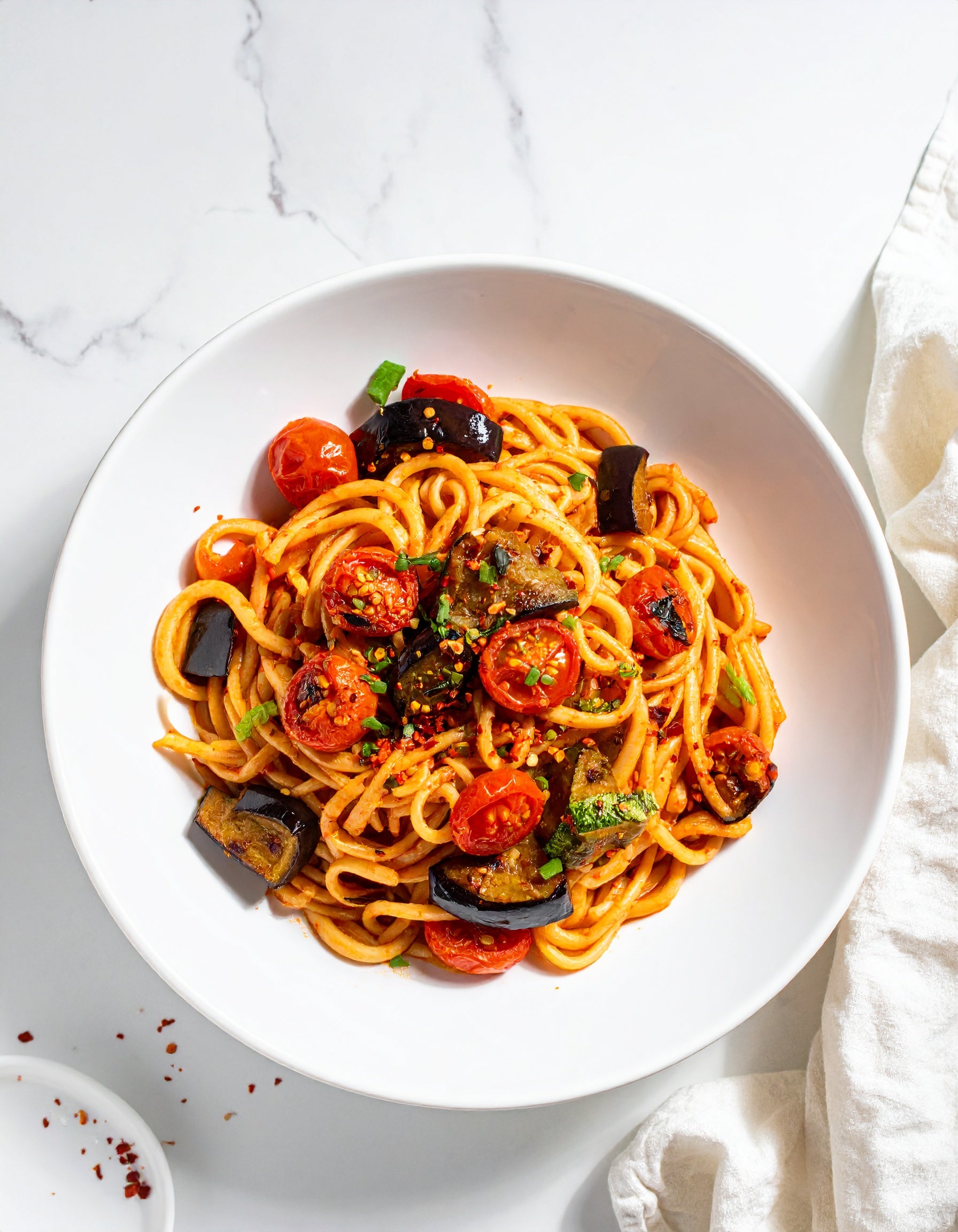
Recipe: Umbricelli alla Norcina
Historical Introduction
Umbricelli alla Norcina is not a celebratory dish. It is a structural one.
Its roots lie in central and southeastern Umbria, particularly around Norcia and the Valnerina, where pig farming and meat preservation shaped everyday cooking far more than agriculture alone. In these inland areas, pork was not occasional protein; it was the organising system of the kitchen. When pasta entered that system, it adapted accordingly.
The dish likely took recognisable form between the 18th and 19th centuries, when hand-rolled pasta became more common in rural households and pork processing practices were already well established. There is no evidence of a single moment of invention. Like most Umbrian staples, Norcina-style pasta emerged from repetition rather than design.
Crucially, the dish predates restaurant culture. It belongs to home cooking, later absorbed into trattorie without losing its internal logic.
Why This Dish Works
Umbricelli alla Norcina works because every element exists for a reason.
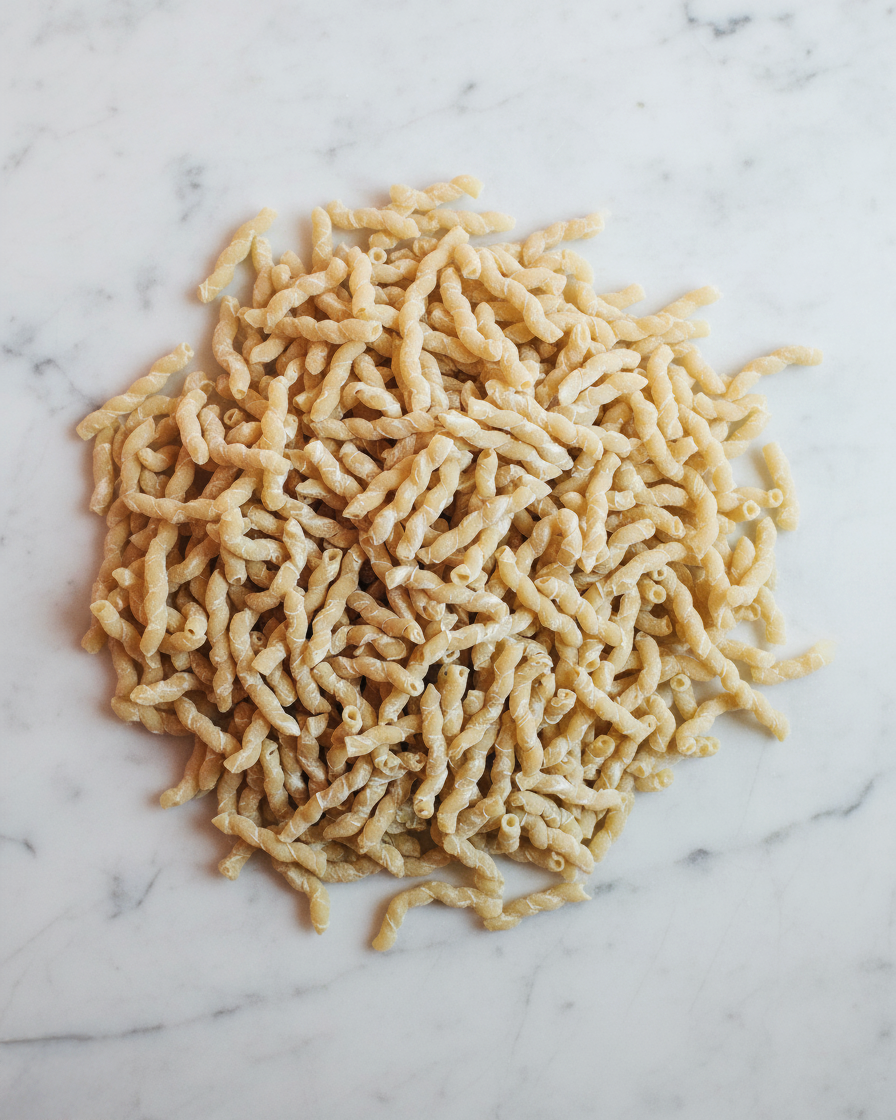
- Umbricelli are thick, rough, and dense. They demand fat and resist collapse.
- Fresh pork sausage provides richness, salt, and structure in one ingredient.
- Black pepper sharpens rather than perfumes.
- Cheese, when used, reinforces savouriness rather than sweetness.
Historically, the dish relies on emulsification, not cream. Fat from the sausage, starch from the pasta water, and mechanical agitation create the sauce. This produces richness without heaviness and keeps the dish grounded in preservation logic rather than dairy abundance.
Nothing here is decorative. The dish is complete because it is internally balanced, not because it is complex.
 How It Is Traditionally Made (Method Logic)
Traditionally, umbricelli alla Norcina is made quickly and directly.
Fresh sausage is crumbled and cooked gently to render fat without drying the meat. Garlic may appear briefly, but never dominates. There is no browning for flavour development in the modern sense; the goal is fat release, not caramelisation.
Pasta is cooked al dente and finished in the pan with the sausage, using starchy water to bind the sauce. Cheese, when added, is incorporated off the heat to avoid clumping.
The result is a sauce that clings, not coats — dense but not creamy, rich but not sweet.
Historical Use and Evolution
Historically, this dish was everyday food in pork-producing areas. It did not require special cuts, long cooking, or imported ingredients. It made use of what was available after sausage-making and slaughter season.
Over time, the dish evolved — and not always for the better.
- Cream appears in the 20th century, largely due to restaurant adaptation and changing tastes.
- Garlic becomes more assertive in some versions.
- Texture shifts toward smoothness rather than grip.
While these versions are now widespread, they represent reinterpretations, not origins. The older structure remains legible beneath them.
Where It Is Still Eaten Today
Umbricelli alla Norcina remains widely eaten in:
- Norcia and surrounding towns
- Valnerina villages
- Traditional trattorias across Umbria
In its strongest form, it appears with minimal explanation and little variation. In weaker versions, it becomes a cream-heavy comfort dish divorced from its preservation logic.
The dish survives because it still makes sense.
Fun Facts & Cultural Notes
- “Norcina” refers to technique and ingredient culture, not a fixed recipe.
- The dish is often wrongly described as “creamy” — historically, it wasn’t.
- It is one of the clearest examples of fat-driven pasta emulsification in central Italy.
- Outside Umbria, it is frequently paired with the wrong pasta shape.
Traditional Recipe: Umbricelli alla Norcina
Ingredients (serves 4)
- 400 g fresh umbricelli
- 300 g fresh pork sausage (Umbrian style if possible)
- 1 small clove garlic (optional, lightly crushed)
- Freshly ground black pepper
- 40–50 g grated Pecorino or aged sheep’s cheese
- Salt (if needed)
Method
- Bring a large pot of well-salted water to a boil.
- Remove casing from the sausage and crumble gently.
- Cook sausage slowly in a wide pan over medium heat, allowing fat to render without browning.
- Add garlic briefly if using, then remove it.
- Cook umbricelli until just al dente.
- Transfer pasta to the pan with sausage, adding pasta water as needed.
- Toss vigorously to emulsify.
- Remove from heat, add cheese and pepper, and mix until glossy.
- Serve immediately.
 Plant-Based Alternative (Modern Interpretation)
Note: This version is a contemporary adaptation, designed to respect structure and balance, not to replicate history.
Key substitutions
- Use a coarse, protein-rich plant-based sausage or crumbled mushrooms + walnuts
- Add olive oil for fat structure
- Reinforce savouriness with black pepper and aged vegan cheese
Ingredients
- 400 g umbricelli (egg-free if needed)
- 250 g plant-based sausage or mushroom-walnut crumble
- 2 tbsp extra virgin olive oil
- Black pepper
- Vegan aged cheese alternative
- Salt
Why This Dish Matters
Umbricelli alla Norcina explains Umbria more clearly than any manifesto.
It shows how pork shapes pasta, how fat replaces excess, and how inland cuisines build richness without abundance. It is not flashy, not exportable, and not designed to impress.
It exists because it works.
And that is exactly why it endures.