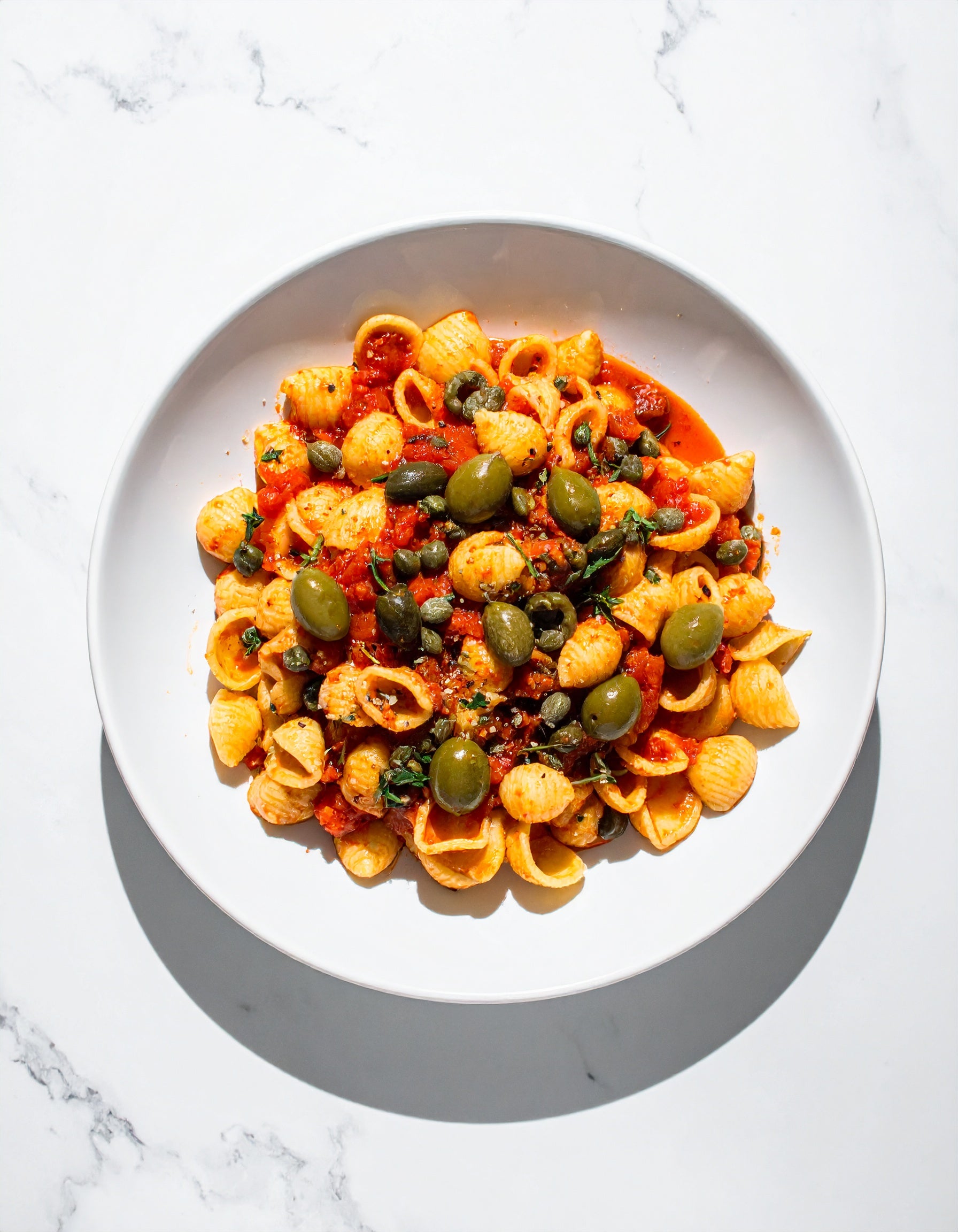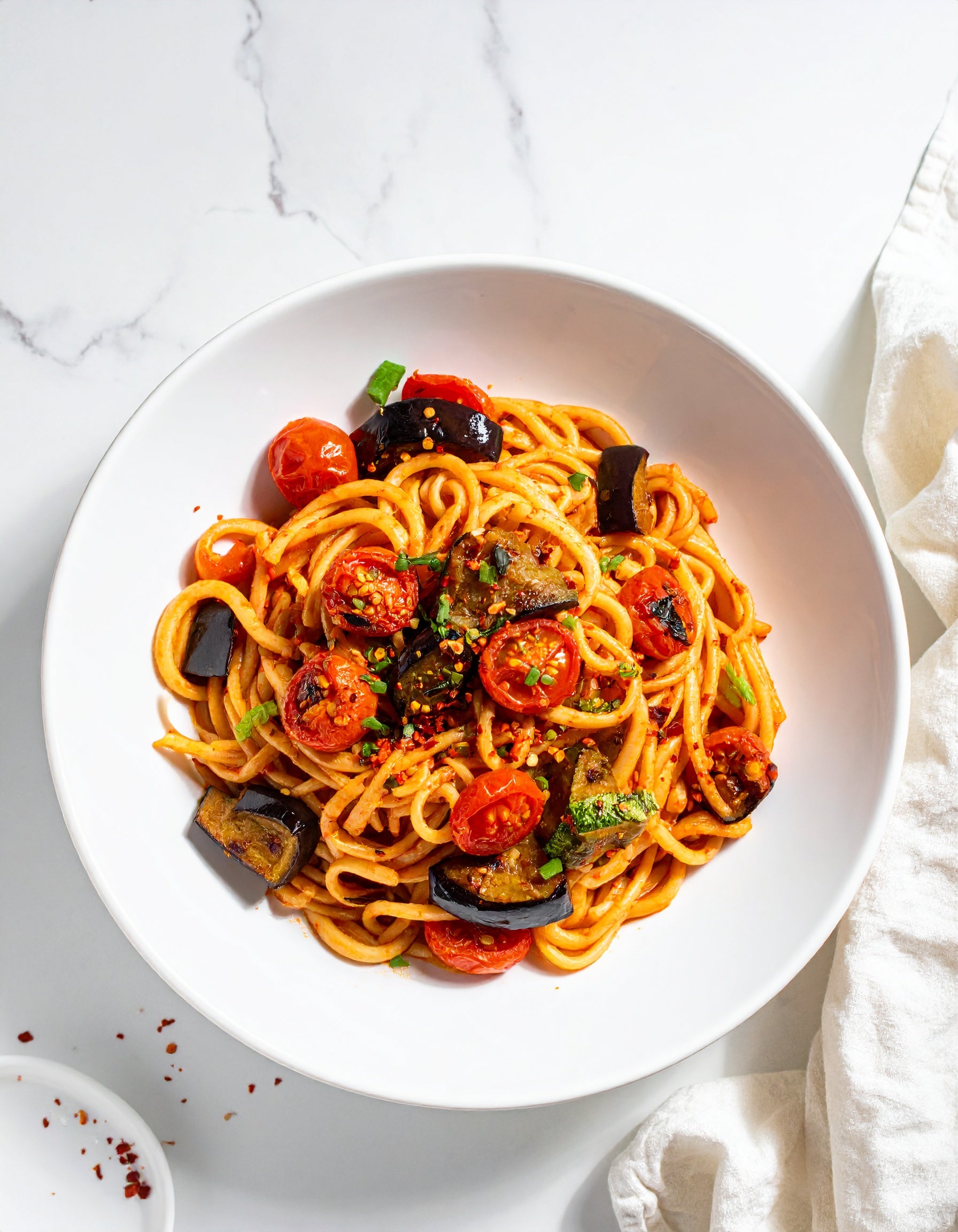
Recipe: Penne all’Arrabbiata – The People’s Lightning

There’s a particular hour in Rome—late, loud, slightly reckless—when the city starts to hum.
It’s after the second bottle of table wine, when the plates have been cleared but conversation hasn’t. Someone in the kitchen reaches for a pan, a handful of garlic, a crumbling of dried chili.
The sound that follows—the quick, bright sizzle of peperoncino hitting oil—is the sound of Arrabbiata being born.
No other Roman pasta captures temperament so perfectly. It’s quick, cheap, honest, and just a little furious.
The word itself means angry, but this anger is joyful—the kind that flushes your cheeks and makes you laugh between forkfuls.
History & Origins – The Spice of Post-War Rome
Unlike many of Lazio’s ancient sauces, Arrabbiata is a child of the 20th century.
Its ingredients—tomato, chili, garlic, and parsley—reflect post-war Rome: modern ingredients, fast heat, and a growing appetite for intensity.
The earliest printed versions appear in the 1950s, though oral histories place it earlier, in the working-class district of Trastevere.
It was the dish of late-night cooks and osterie—made from whatever was left after service. Peperoncino, once an exotic southern import, had by then become a staple of Roman cupboards.
Some food historians trace its lineage to older “pasta alla carrettiera” (the cart-driver’s pasta), a quick oil-and-chili dressing eaten cold by travellers.
But where carrettiera whispers, Arrabbiata shouts: it replaces rawness with fire, simplicity with theatre.
By the 1960s, it was immortalized in Roman cinema—Marcello Mastroianni eating it, Sophia Loren defending it—and it became shorthand for passion itself.
Ingredients (Classic, Serves 4)
- 400 g penne rigate
- 2 tbsp extra-virgin olive oil
- 2 cloves garlic, lightly crushed
- 1–2 small dried peperoncini (adjust heat to taste)
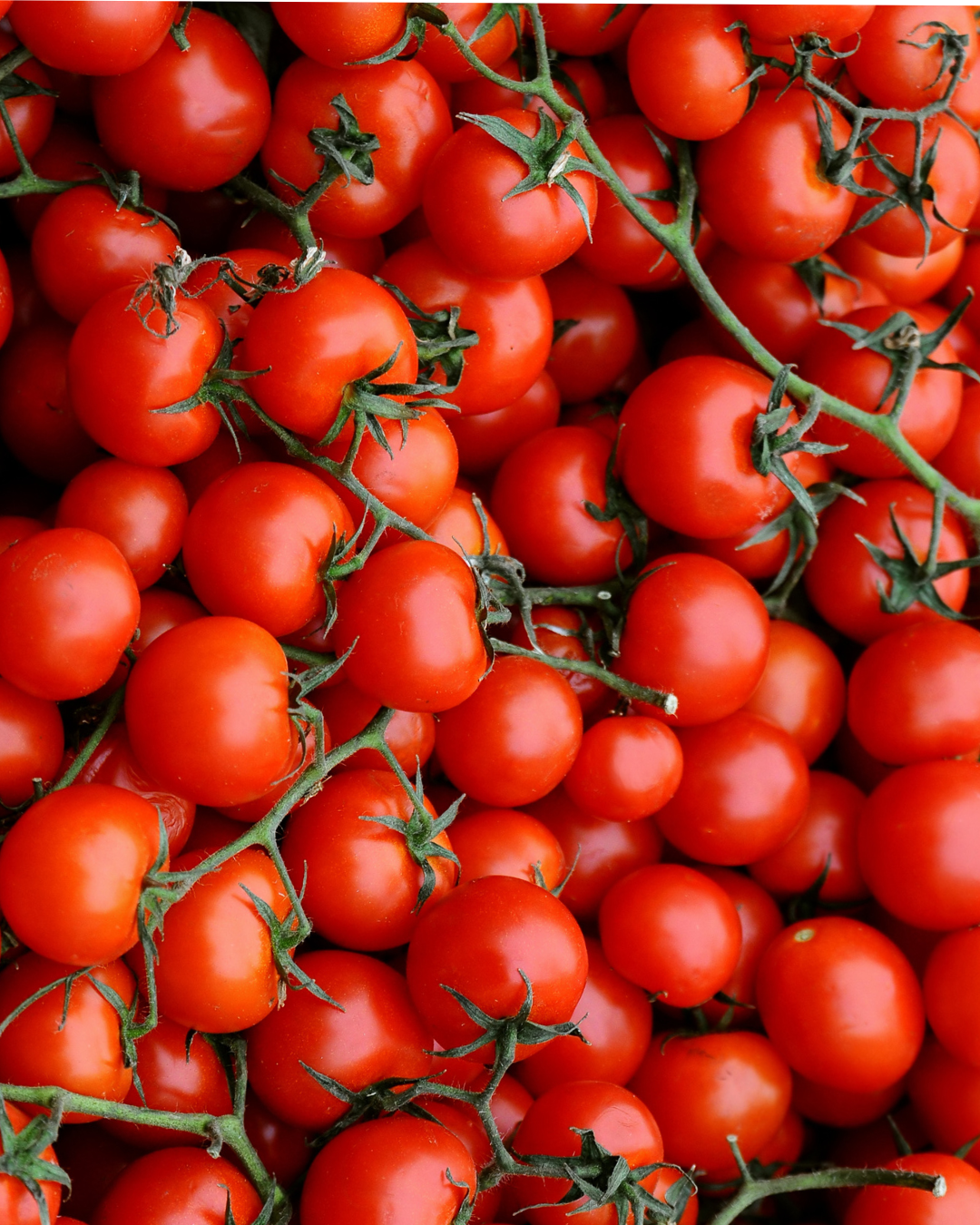
- 400 g peeled San Marzano tomatoes, hand-crushed or passed
- A small handful of flat-leaf parsley, finely chopped
- Salt
That’s all. Four pantry staples and a sense of timing.
Preparation (Classic Method)
Step 1 – The Base
Warm olive oil in a wide pan. Add garlic and crushed peperoncini. Let them sizzle gently until the garlic edges just begin to colour—no more. Remove the garlic if you prefer a gentler bite.
Step 2 – The Sauce
Add the crushed tomatoes to the pan. Salt lightly.
Simmer uncovered for 12–15 minutes until thick and bright red, stirring occasionally.
Step 3 – The Pasta
Boil penne in salted water until al dente. Reserve a small cup of the cooking water.
Step 4 – Combine
Toss the drained pasta directly into the sauce with a spoon of pasta water. Cook together for one minute so the starch emulsifies with the oil.
Step 5 – Finish
Turn off the heat, fold in the chopped parsley, toss again, and serve immediately.
Optional: a dusting of Pecorino Romano—though traditionalists often skip cheese to let the chili sing.
Technique & Logic – The Anatomy of Heat
Arrabbiata works because of controlled contrast.
- The olive oil carries capsaicin, dispersing heat evenly.
- Garlic provides base sweetness.
- Tomato acidity brightens and binds the oil, forming a stable emulsion.
- Parsley adds chlorophyll freshness—a green punctuation mark at the end.
The secret is temperature: garlic must infuse, not burn; chili must sting, not numb; tomato must reduce, not stew.
Rome calls this technique “soffritto perfetto”—the perfect beginning. If you get the first minute right, the rest follows.
Cultural Footnotes
- Earliest citation: 1950s Roman cookbooks (La Cucina Romana by Ada Boni mentions similar preparations).
- Pasta shape: Always penne—their ridges hold the thin oil-tomato glaze better than smooth spaghetti.
- Symbolism: The red sauce and chili heat came to represent post-war vitality; it was the opposite of scarcity food.
- Regional identity: Though ubiquitous now, Arrabbiata remains quintessentially Roman—the city’s answer to Naples’ marinara.
All confirmed by regional culinary archives and Gambero Rosso historical references.
Fun Facts & Roman Wit
- Romans say: “L’Arrabbiata non si cuoce, si domina.” — “You don’t cook Arrabbiata, you tame it.”
- In Trastevere slang, calling someone arrabbiato come una penna means “fired up but lovable.”
- The sauce’s speed made it the unofficial after-midnight meal of Roman bartenders and actors.
- In the 1970s, many trattorie posted signs: “Solo Amatriciana o Arrabbiata oggi.” — “Only Amatriciana or Arrabbiata today.” The kitchen decided; you obeyed.
- Some modern chefs add cherry tomatoes for sweetness, but old Romans insist the sauce should “bite, not flirt.”
Closing Reflection – The Joy of Anger
Arrabbiata is Rome’s way of laughing through frustration.
A city of bureaucracy, traffic, and endless debate needed a sauce that let off steam fast—and so it did.
In ten minutes, anger becomes pleasure. You sizzle it, stir it, taste it, and it’s gone.
It teaches a small Roman truth: that passion is neither good nor bad—it’s just heat, waiting to be turned into something delicious.
So next time you feel Arrabbiata rise inside you, remember the pan: a little oil, a little fire, a handful of tomatoes— and suddenly, you’re smiling again.
Because in Lazio, even anger has flavour.