Recipe: Bucatini all’Amatriciana – The Red Voice of Lazio
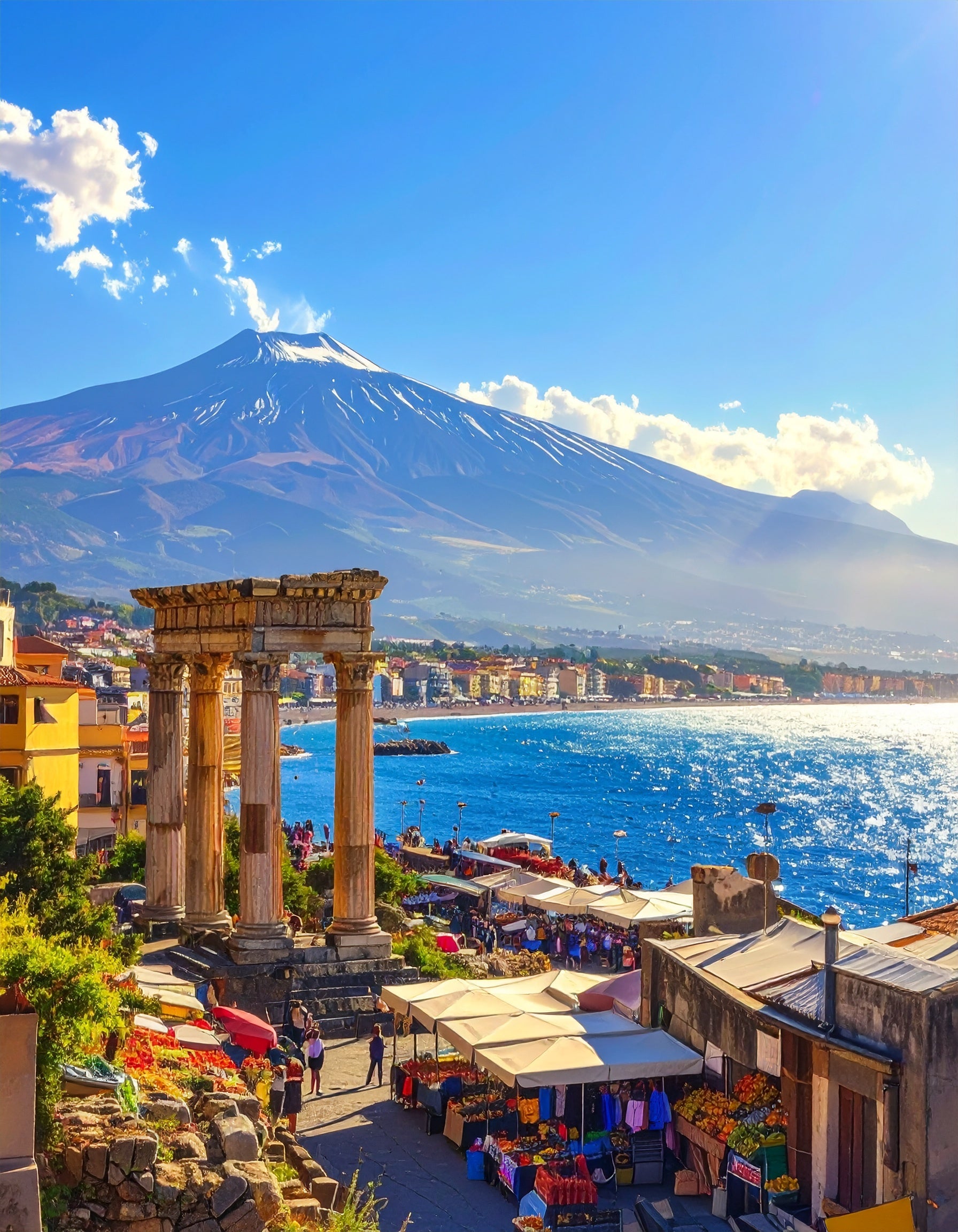
Drive east from Rome before sunrise. The mist lifts over the Sabine hills, and suddenly the world opens — high meadows, stone shepherd huts, and the quiet little town of Amatrice, 1,000 meters above sea level. There’s no sea breeze, no marble palaces, no tourists. Just cold mornings, grazing sheep, and a smell that hits you before you see it: pork fat melting in a pan, a curl of smoke, a whisper of tomato.
That smell is Amatriciana, one of Italy’s most famous pasta sauces, born humble and raised to immortality.
It’s the bridge between mountain and city — shepherd logic made urban. Where Cacio e Pepe speaks in whispers, Amatriciana sings in red.
History & Origins – A Sauce from the Highlands
The story begins not in Rome but in Amatrice, a small town in northern Lazio once under Abruzzese jurisdiction. Long before tomatoes arrived, shepherds made Gricia — guanciale, pecorino, and black pepper tossed with pasta. When tomatoes from the Americas entered Italian cooking in the 17th century, someone in Amatrice added them to the pan, and the world changed colour.
By the late 18th century, pasta alla matriciana (from amatriciana, “of Amatrice”) had reached Rome. The Papal cooks refined it, replacing local cheese with sharp Pecorino Romano and preferring the thicker, hollow bucatini — tubes that act like sauce pumps.
By the 20th century, Amatriciana had become Rome’s signature red — appearing in trattorie, worker canteens, and state banquets alike.
In 2015, the Comune di Amatrice codified the official recipe: guanciale, peeled tomatoes, white wine, and grated pecorino — nothing else. No onion, no garlic, no pancetta. Tradition here isn’t optional; it’s identity.
Ingredients (Classic, Serves 4)
- 400 g bucatini
- 150 g guanciale (pork jowl, from Amatrice if available)
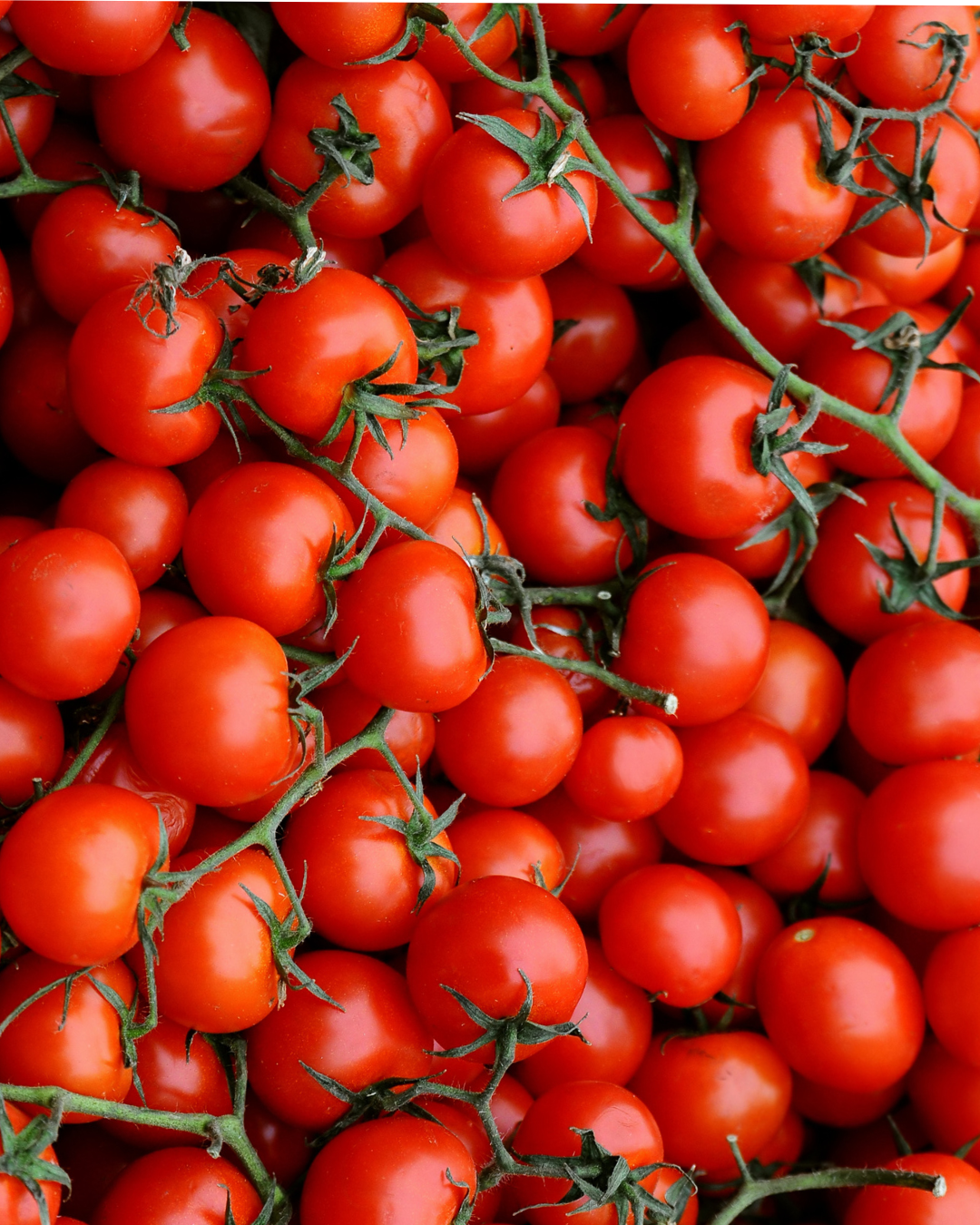
- 400 g peeled San Marzano tomatoes, hand-crushed
- 60 g Pecorino Romano DOP, finely grated
- 50 ml dry white wine
- Salt and freshly ground black pepper
- (Optional: a pinch of dried peperoncino, used in some Roman versions)
That’s it — the entire architecture of Rome’s red heart.
Preparation (Classic Method)
Step 1 – Render the Guanciale
Start in a cold pan. Cook guanciale over low heat until the fat renders and the edges turn golden.
Timing is everything: too slow and it’s greasy; too fast and it burns. Remove the crisp pieces and keep the fat.
Step 2 – Deglaze with Wine
Pour in white wine; let it hiss and evaporate. The acidity cleans the pan, balancing the pork’s sweetness.
Step 3 – Build the Sauce
Add the crushed tomatoes to the rendered fat. Simmer gently for 10–12 minutes, stirring occasionally until thick and shiny. Return guanciale to the sauce in the last minutes. Season lightly — Pecorino will add salt later.
Step 4 – Cook and Combine
Boil bucatini in salted water until just shy of al dente. Transfer to the pan with the sauce, adding a ladle of starchy water. Toss and swirl until the sauce clings like lacquer.
Step 5 – Serve with Pecorino
Off the heat, fold in half the Pecorino. Plate, then shower with the rest.
The pasta should look like it’s blushing — glossy red, never drowned.
Technique & Logic – The Science of Cling
Bucatini are a marvel of engineering. Their hollow center allows the sauce to enter, burst, and renew with every bite. The guanciale fat — mostly oleic acid, like good olive oil — emulsifies with tomato pectin and pasta starch, forming the velvet texture that defines a true Amatriciana.
The white wine adds malic and tartaric acids, cutting through the pork’s sweetness; tomatoes contribute glutamates for umami depth. Pecorino finishes the equation, salting and thickening without softening.
This is a dish of balance: fat against acid, sweet against salt, patience against heat.
Cultural Footnotes
- Earliest mention: Recipes using the name alla matriciana appear in Roman sources by the mid-19th century; earlier gricia versions without tomato are documented in Amatrice.
- Bucatini: Once made by hand with thin reeds to form the central hole; today bronze-drawn versions are prized for their rough texture.
- Amatrice’s DOP-style specification lists: guanciale Amatriciano, white wine, San Marzano or similar tomatoes, Pecorino (either Amatrice or Romano), salt, pepper, and optional chili.
- After the 2016 earthquake, many Italian restaurants donated proceeds from Amatriciana to help rebuild the town — turning the dish into a symbol of national unity.
All these details are confirmed in historical and civic sources from Lazio and the Consorzio del Guanciale di Amatrice.
Fun Facts & Roman Wit
- Romans joke: “Chi mette la cipolla, non è di Amatrice.” — “Who puts onion in it isn’t from Amatrice.”
- The sauce’s colour is sometimes called “rosso che canta” — “red that sings,” for the sound it makes when the guanciale fat sizzles.
- Traditionally eaten on Sundays; Fridays were reserved for pasta e ceci or baccalà.
- When Italians say a debate “is like the Amatriciana,” they mean: everyone has an opinion, nobody agrees, everyone’s still eating.
- In Lazio dialect, “amatricià” also means to fix something lovingly — a fitting pun for a dish that repairs moods.
Vegan Bucatini all’Amatriciana — A Roman Classic Rebuilt Properly
Amatriciana is a dish with structure. Fat warms the pan. Something browns. Tomato paste darkens. Acidity cuts through. Pepper sharpens the edges. Pasta water pulls everything together into a gloss. If you skip one of these steps, the dish collapses. If you try to replace guanciale with a dry spice, you’ve misunderstood what the dish is.
A plant-based Amatriciana doesn’t work by mimicry. It works by respecting the geometry of Roman cooking and replacing each building block with something that behaves the same way in the pan. You need an ingredient you can cut, brown, and render into flavour — tofu, tempeh, aubergine, mushrooms — not a spice pretending to be meat. Get that right, and the dish still feels Roman.
Ingredients (Serves 4)
Pasta & Sauce
- 400 g bucatini (egg-free)
- 3–4 tbsp extra-virgin olive oil
- 1 small shallot, finely minced (optional)
- 2 tbsp tomato paste
- 400 g crushed tomatoes
- 1 tbsp white wine vinegar
- Salt, black pepper, chili flakes
- Pasta cooking water (for emulsifying)
Choose ONE Guanciale Replacement
- Smoked tofu, diced into small lardons
- Tempeh, cubed and lightly marinated
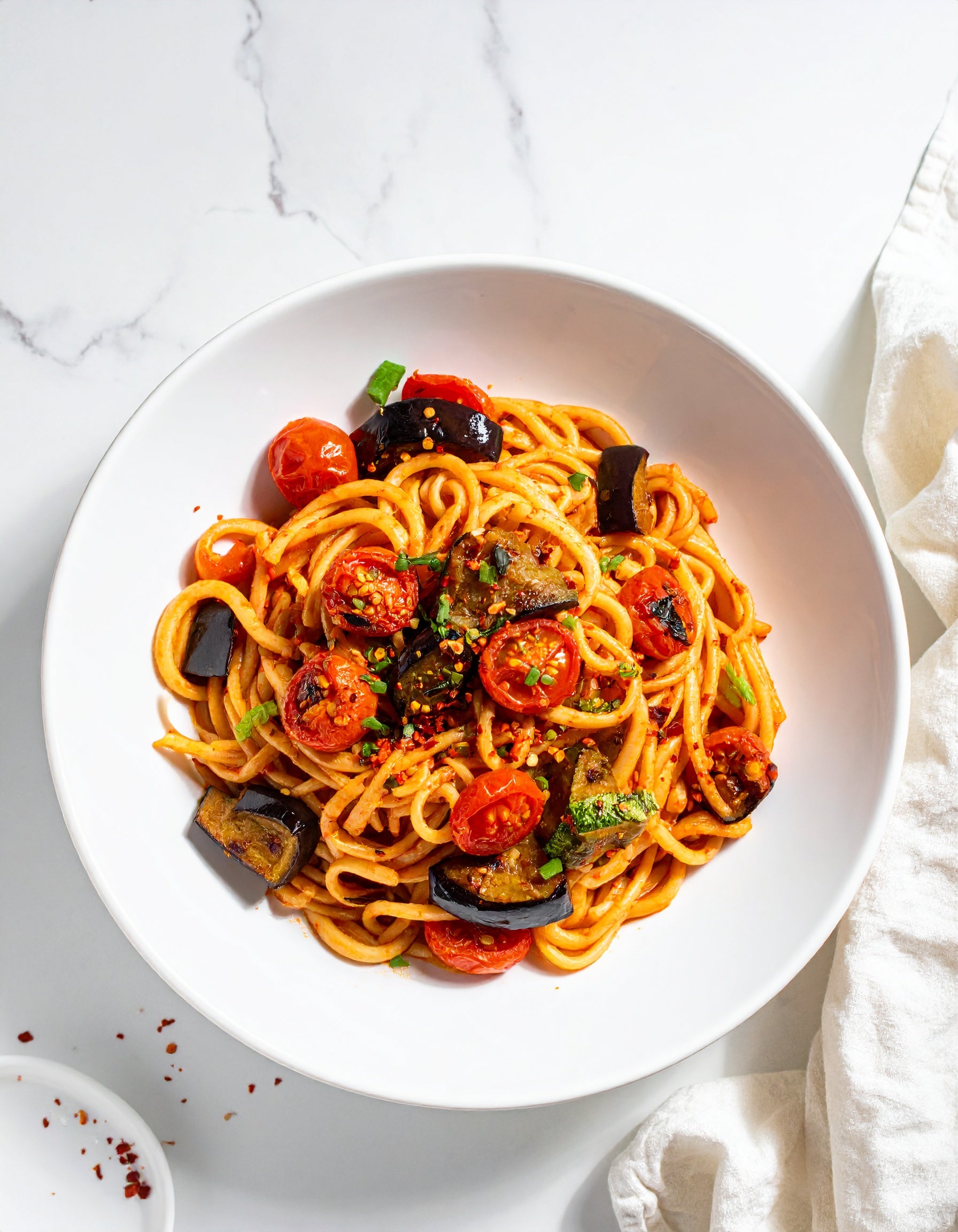
- Aubergine, cubed and fried until crisp
- Oyster mushrooms, torn and seared until deeply browned
(You only need one — each works differently but all follow the same Roman logic.)
Method
1. Prepare the topping
Choose your guanciale substitute and cook it until it develops real flavour and texture:
- Smoked tofu: toss with a bit of soy sauce and oil, then fry until golden and chewy.
- Tempeh: season lightly (soy, oil, tiny dab of tomato paste) and brown until crisp-edged.
- Aubergine: salt briefly, pat dry, and fry until crisp outside and creamy inside.
- Oyster mushrooms: sear in hot oil until they caramelise and shrink, with browned edges.
Remove from the pan. Whatever oil is left behind is now flavoured — that’s your foundation.
Build the sauce base
In the same pan, add a little more olive oil if needed.
-
- Sauté the minced shallot until soft and lightly golden.
- Add the tomato paste and cook it until it turns darker, sweeter, and slightly sticky.
This step creates the Maillard backbone of a real Amatriciana.
Add tomato + acidity
Stir in the crushed tomatoes and the white wine vinegar.
Let the sauce simmer until it thickens and the flavours settle into one another.
Season with salt, black pepper, and chili flakes.
Taste for balance — the sauce should feel bright, warm, and slightly sharp.
Cook and emulsify
Boil the bucatini until just shy of al dente.
Transfer the pasta directly into the sauce.
Add starchy water a little at a time while tossing vigorously.
You're looking for the point where the sauce becomes glossy and clings to the pasta — the Roman signature.
Bring it all together
Fold your topping back into the sauce (except for aubergine — that stays on top so it doesn’t lose crispness).
Finish with a final grind of black pepper.
Serve immediately. Amatriciana waits for no one.
Closing Reflection – The Anthem of Red
If Cacio e Pepe is Rome’s whisper, Amatriciana is its aria. It’s not shy, not modest — it bursts. The sound of guanciale frying is the sound of appetite itself, echoing through centuries of stone alleys.
In its redness lies the evolution of Italy’s palate: from shepherds’ white simplicity to the global, sun-drenched age of the tomato. Yet the essence never changed — just four ingredients dancing around fire and time.
To eat it is to understand the Roman temperament: loud, generous, argumentative, and profoundly human.
A sauce that begins with fat and ends with music.
A plate that leaves nothing but silence — and maybe one more glass of wine.