Ingredients: Pork in Umbria

In Umbria, pork predates gastronomy.
Long before recipes, classifications, or regional identities, pigs were central to survival economies across inland central Italy. They required limited pasture, could be fed on scraps, acorns, and by-products of agriculture, and converted waste into protein and fat with unmatched efficiency.
For Umbrian households, raising pigs was not a culinary choice. It was a strategic one. Pork offered something no other animal could provide in equal measure: meat, fat, and preservation potential in a single system.
This is the foundation on which Umbrian pasta culture later built its sauces.
Norcineria: A System, Not a Speciality
The word norcineria comes from Norcia, but the practice extends far beyond the town itself. It refers to the entire craft of pig slaughtering, processing, curing, and preserving — a body of knowledge transmitted through necessity, not prestige.
In Umbrian rural life:
- Slaughter happened seasonally
- Every part of the animal was used
- Preservation determined flavour
Salt, air, time, and fat were the primary tools. Fresh pork was rare and short-lived. Cured pork was the norm.
This matters for pasta because most Umbrian pasta sauces were designed to interact with preserved pork, not fresh cuts. The flavours are concentrated, salty, and fat-forward by design.
Fat as Flavour and Currency
In Umbrian cooking, fat is not an accent. It is structure.
Historically, olive oil was available but not abundant, and butter was impractical in much of the region. Pork fat — lard, rendered drippings, and cured fat — filled that gap. It lubricated cooking, enriched starches, and carried flavour efficiently.
In pasta contexts, pork fat performs several roles:
- It coats thick, rough pasta surfaces
- It binds simple ingredients into cohesive sauces
- It provides satiety without large quantities of meat
This is why Umbrian pasta sauces often feel rich even when ingredient lists are short. Fat does the work.
Pork and Umbrian Pasta Logic
Umbrian pasta shapes evolved alongside pork use.
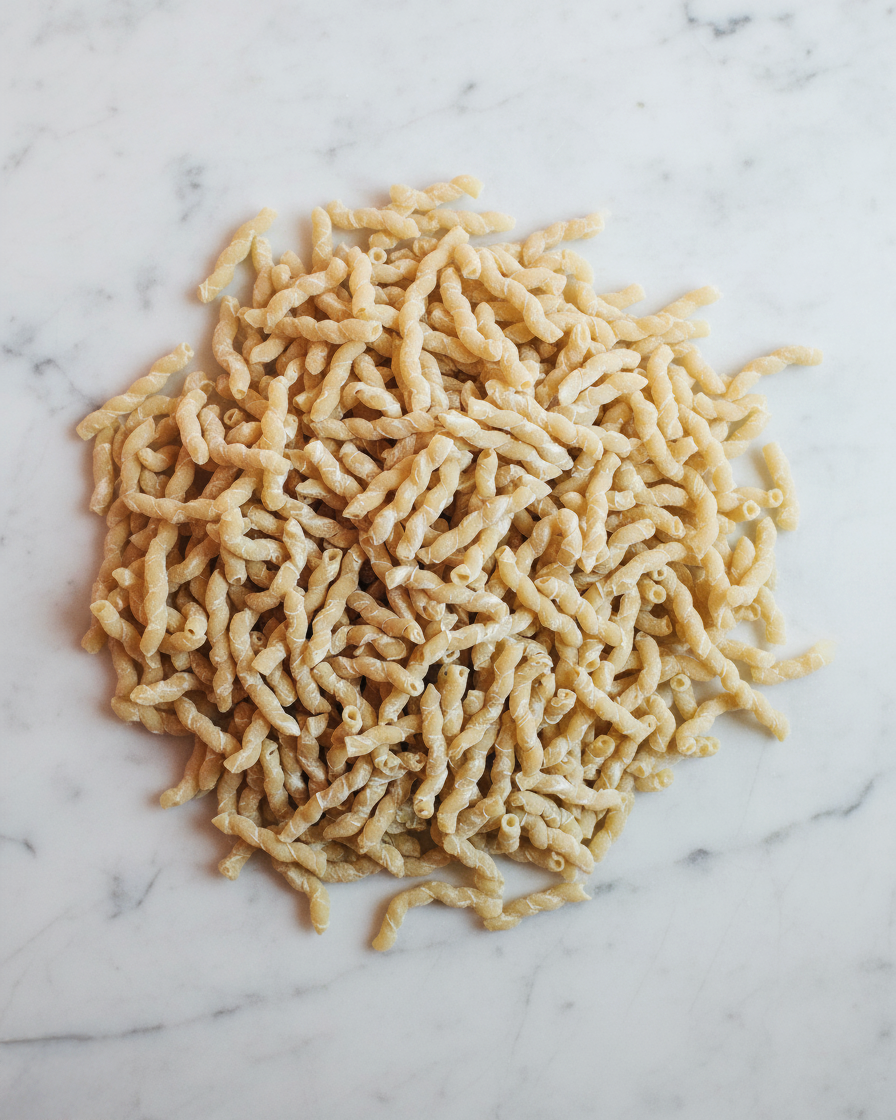
Thick, resistant pastas such as umbricelli, strangozzi, and ciriole exist because they can hold:
- Rendered fat
- Minced or crumbled cured meats
- Dense sauces without collapsing
Thin or delicate pasta would fail under these conditions. Structure follows ingredient, not aesthetics.
Importantly, pork in Umbrian pasta is rarely decorative. It is integrated — chopped, rendered, or emulsified into the sauce. Large chunks or theatrical presentations are modern distortions.
Cuts, Preservation, and Hierarchy
Umbrian pork culture historically prioritised usefulness over hierarchy.
Premium cuts were not reserved for display; they were preserved like everything else. Offal, secondary cuts, and fat were valued because they extended the life of the animal and fed more people.
In pasta dishes, this translated into:
- Sausages made from mixed cuts
- Guanciale valued for fat content, not prestige
- Offal-based sauces in poorer contexts
The idea of pork as a luxury protein does not align with Umbrian history. Pork was central because it was reliable, not because it was elite.
Pork Beyond Pasta (Brief Context)
Outside pasta, pork defines much of Umbrian daily cooking: cured meats, roasts, broths, and preserved products dominate the table.
This broader presence reinforces why pasta sauces lean pork-ward. Pasta is not the star — it is the carrier within a pork-centred system.
Understanding Umbrian pasta without understanding pork is structurally impossible.
Pork Today in Umbria
Pork remains culturally central, though its role has shifted.
- Industrial production has replaced household slaughter
- Preservation techniques are formalised rather than domestic
- Consumption is less seasonal
Yet the flavour logic persists. Pasta sauces continue to rely on pork fat, cured meats, and sausage bases even as sourcing changes.
In contemporary kitchens, pork still anchors Umbrian pasta more than any other protein.
Cultural Notes and Perspective
Modern narratives often isolate Norcia as a gastronomic brand, but this risks misunderstanding the wider picture. Norcia did not invent Umbrian pork culture — it systematised and professionalised it.
The deeper truth is that pork shaped Umbrian food because it solved problems. It fed inland communities efficiently, preserved well, and paired naturally with starches.
In Umbria, pork is not about indulgence.
It is about continuity.
Why Pork Matters
Pork explains why Umbrian pasta is thick, assertive, and unafraid of fat.
It explains why sauces are dense rather than delicate.
Why pasta is built to endure rather than impress.
Why flavour here comes from preservation, not embellishment.
Remove pork, and Umbrian pasta loses its grammar.