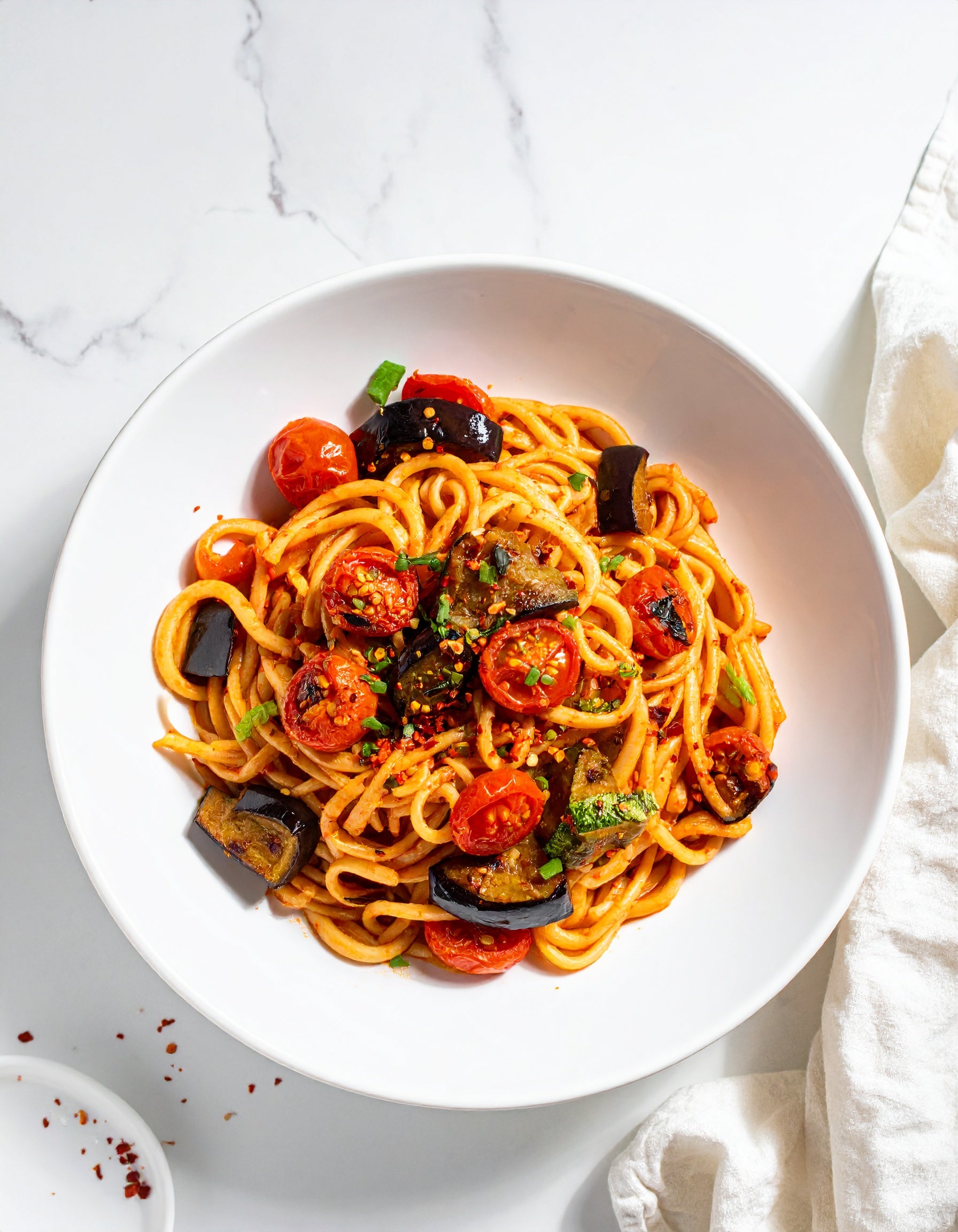
Ingredient: Peperoncino – The People’s Fire
In a Roman kitchen, silence is rare — except right before the chili hits the pan.
Oil waits in still gold, garlic trembles, and then someone tosses in a few red flakes.
They sizzle, spit, and perfume the air with electricity.
That second — that little snap — is the city waking up.
No ingredient speaks the Roman language of appetite and rebellion like peperoncino, the chili.
It’s the quick pulse behind Arrabbiata, the flash in Amatriciana, the exclamation point at the end of so many Roman sentences.
It doesn’t dominate; it punctuates.
And like the people who adopted it, it arrived from elsewhere, adapted fast, and refused to leave.
History & Origins – From the New World to the Old Temper
Before the 1500s, Italy had no chili. Roman kitchens relied on black pepper for spice — rare, expensive, often hoarded by the clergy and nobility.
Then, around 1494, Spanish ships carried Capsicum annuum from the Americas. It spread like gossip.
By the early 1600s, peperoncino had conquered southern Italy. In poor rural regions — Calabria, Basilicata, Campania, and Lazio — it became the “people’s pepper,” a free substitute for costly imports.
Farmers in the Ciociaria and coastal Pontine Plain began cultivating it in backyard patches, drying strings of scarlet pods under the eaves like Christmas garlands.
At first, Rome resisted — the city clung to its black pepper traditions. But by the late 18th century, chili had slipped into the pan. Peperoncino romano was born.
Today, its role is distinct from southern Italy’s bombast: where Calabrians eat it raw and fiery, Romans use it as seasoning — one or two dried pods to tease the tongue, never torture it.
It’s heat with conversation, not confrontation.
Flavor Profile & Culinary Behavior – The Roman Balance of Fire
Unlike pepper, chili’s burn comes from capsaicin, concentrated in the seeds and inner membrane.
Capsaicin binds to the same receptors that sense heat, fooling the brain into tasting temperature.
But it also stimulates endorphins — which might explain why Arrabbiata feels like happiness disguised as anger.
In Lazio, peperoncino is used sparingly — a note, not a theme.
It appears in:
- Penne all’Arrabbiata (tomato, garlic, chili, parsley)
- Spaghetti alla Carrettiera (oil, chili, raw tomato)
- Amatriciana (optional pinch to wake the sauce)
- Broccoli ripassati (sautéed greens with chili and garlic)
Flavor: bright, warm, earthy.
Aroma: sun-dried fruit, resin, smoke.
Behavior: releases flavor into fat, not water; must never burn.
Cultural Meaning – Anger as Pleasure
In Roman slang, “arrabbiato” (angry) doesn’t always mean furious; it means alive.
To call a person “una penna all’arrabbiata” — “a spicy penne” — is to call them spirited, honest, hard to forget.
Peperoncino became a symbol of honest appetite — a rebellion against blandness, against hierarchy, against the idea that spice belonged only to the rich.
Its popularity in post-war Rome made it a culinary equalizer. Even the poorest kitchens could afford flavour that shouted.
There’s also superstition in its colour.
Romans hang strings of dried chili (trecce di peperoncino) near doorways as amulets against envy and misfortune — a secular version of the horn talisman.
“Better a chili than a priest,” one butcher once told me, grinning. “At least it works.”
Current Local Producers – Lazio’s Fiery Gardeners
Lazio doesn’t produce peperoncino on Calabria’s industrial scale, but its small farms grow beautiful varieties for the kitchen and the eye:
- Azienda Agricola Caramadre (Maccarese, near Rome) – Organic farm supplying local markets with mild red chilis, dried and powdered for restaurants.
- Orto di Alberico (Castel di Leva, Rome) – Family estate growing heirloom vegetables, including peperoncino romano with fruity low-heat flavour; used by chefs at Roscioli and SantoPalato.
- Cooperativa Agricoltori di Viterbo – Produces small-scale dried peperoncino blends, including local cultivars close to diavolicchio.
- BioPontino (Latina) – Coastal organic farm specializing in “sweet heat” peppers, dried under solar panels, sold in Campagna Amica markets.
Their chilies are sun-driven and mineral — the taste of Lazio’s volcanic soil meeting sunlight and bravado.
Fun Facts & Trivia
- Name confusion: In Italian, peperone = bell pepper, peperoncino = chili. Never mix them up in Rome — you’ll get a stare sharp enough to peel garlic.
- Heat scale: Roman varieties hover around 10,000 Scoville units — warm but not destructive. Calabrian diavolicchio can hit 30,000.
- Medicinal myth: Roman nonnas used chili oil on joints and temples for pain relief — “If it burns, it’s working.”
- Cultural cameo: In Fellini’s La Dolce Vita, Marcello Mastroianni eats penne all’arrabbiata after a night of chaos — a subtle nod to the dish’s restorative power.
- Political symbolism: During student protests in the 1970s, chili necklaces were worn as anti-authoritarian badges — the spice of dissent.
Closing Reflection – The Flame That Feeds
If Pecorino is discipline and guanciale is patience, peperoncino is rebellion — the spark that keeps Rome from becoming too serious.
It’s the heartbeat of the osteria, the reminder that cooking is supposed to move you, literally.
One pinch too little and the dish feels timid; one too many and you’ve crossed into chaos.
Somewhere in between lies the Roman miracle: emotion balanced by craft.
So when the oil hisses and the chili releases its perfume, listen closely — it’s not just heat.
It’s Rome laughing through its anger.
It’s passion turned edible.
It’s proof that the difference between rage and joy is often just a splash of sauce.