Ingredient: Olive Oil in Umbria
 Olive Oil Before Identity
Long before olive oil acquired names, labels, or reputations, it existed in Umbria as a difficult crop.
Roman writers already mention olive cultivation in central Italy, including areas that correspond to modern Umbria. Groves were planted, mills were built, oil was pressed and traded. But unlike coastal regions or the warmer south, production here was never reliable. Hillsides rose quickly. Altitude brought frost. Soils varied. Trees survived, but they did not always yield.
Oil was present, but it was never abundant.
That unevenness mattered. It shaped how oil was valued and how it was used. Olive oil was not something to be poured freely or consumed without thought. It was an agricultural result that depended on weather, labour, and risk. Every harvest carried uncertainty. Every litre had weight.
Over time, that reality settled into habit. Oil was handled with care. It was measured. It was expected to justify its presence in a dish.
That attitude never disappeared.
A Landscape That Writes the Oil
To understand Umbrian olive oil, you have to look at where the trees grow.
Groves here are rarely flat. They climb hillsides and inland slopes, often at elevations higher than those found in neighbouring regions. Winters are colder. Summers are shorter. The growing season is tighter. These conditions slow ripening and stress the trees.
The oil that comes from this landscape reflects those pressures.
Umbrian olive oils tend to register green and herbaceous notes first. Bitterness arrives early and stays present. Peppery sensations often appear at the back of the throat rather than on the tongue. Sweetness, when it exists, remains secondary.
None of this is a stylistic decision. These characteristics emerge from cultivar choices, climate exposure, and early harvesting practices developed to manage risk and preserve quality in a marginal environment.
The oil does not soften itself for the cook. It asserts itself, even in small quantities.
Learning to Use Less, Not More
Because olive oil was never plentiful, Umbrian cooking never treated it casually.
In regions where oil flowed more freely, it could be used to build sauces through volume — frying, bathing, enriching. In Umbria, oil developed a different role. It was not asked to carry weight. It was asked to define.
Oil became a finishing element rather than a foundation. It clarified flavours instead of amplifying them. It marked the end of a dish rather than its beginning.
This approach demanded judgement. Too little oil and a dish felt incomplete. Too much and it overwhelmed everything else. Precision mattered.
That expectation still governs how oil is used at the table.
Olive Oil and Umbrian Pasta
In Umbrian pasta culture, olive oil rarely takes centre stage.
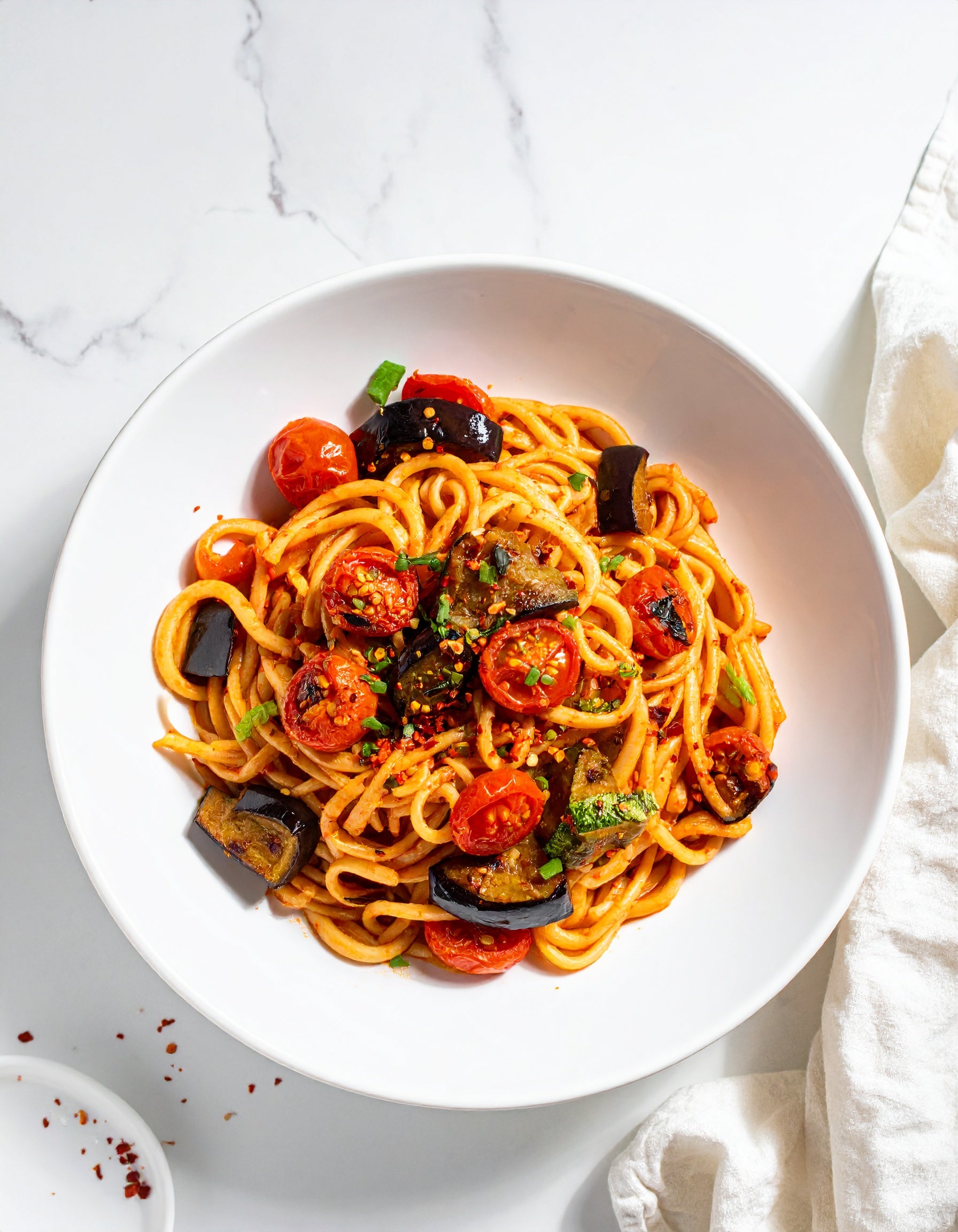
Its role is structural but controlled. It binds simple condiments. It sharpens garlic and chilli. It lifts tomato rather than dominating it. It finishes a plate rather than saturating it.
Pure oil dressings do exist, but they are never neutral. Garlic, herbs, or strong aromatics are almost always present. Oil on its own would be too assertive. It needs context.
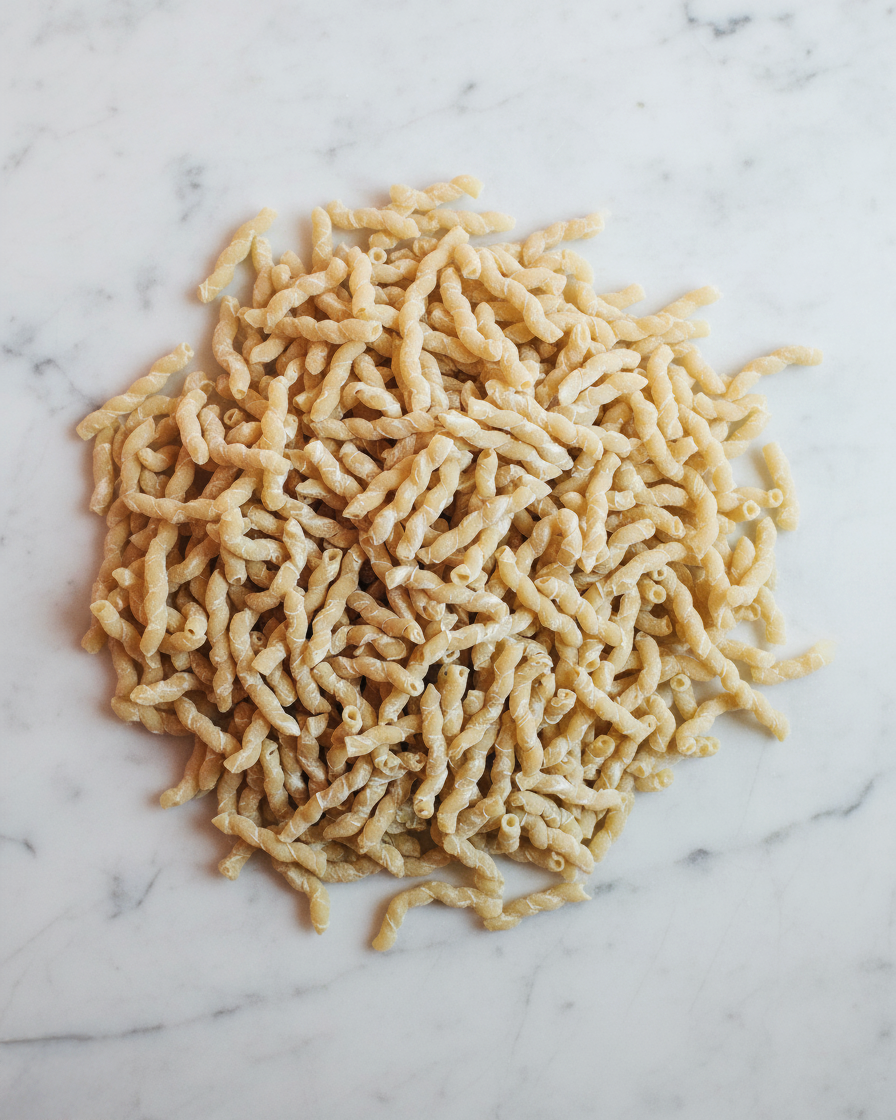
This restraint matches the pasta itself. Umbrian shapes are typically thick, rough, and resistant. They are designed to hold sauces without collapsing. They do not need lubrication. They need definition.
When oil is used correctly, it provides that definition. When it is used excessively, it blurs the structure instead of supporting it. The dish loses clarity.
For this reason, excess oil has always felt out of place in Umbrian pasta, even before anyone articulated why.
Oil and Pork: A Long Conversation
Olive oil in Umbria has never existed alone.
For centuries, it has shared the kitchen with pork fat. The two developed distinct roles, shaped by availability and function. Pork fat handled heat, bulk, and richness. Olive oil handled sharpness, aroma, and finish.
They were not substitutes. They were complementary tools.
In pasta sauces, this division remains visible. Pork provides body and depth. Olive oil adds edge and control. Used together, they create dishes that feel rich without heaviness and bitter without aggression.
This balance explains much of Umbrian pasta’s character. The food satisfies without excess. It holds flavour without softness.
Beyond Pasta, the Same Logic Holds
Outside pasta, olive oil behaves in Umbria exactly as it does within it.
Vegetables are dressed, not drowned. Soups are finished, not thickened. Bread is seasoned, not soaked. Oil arrives late, decisively, and then stops.
Across dishes, the pattern repeats. Olive oil is treated as a final note — something that completes a preparation rather than constructs it.
This consistency is not theoretical. It is practical. It reflects generations of cooking shaped by limited yield and careful use.
Modern Production, Old Habits
Contemporary milling has improved hygiene, consistency, and control. Protected designations have formalised identity and traceability. But these developments have not changed how Umbrian oil behaves in the kitchen.
The oils are still assertive. Early harvesting remains common. Measured use is still expected.
In some modern restaurants, olive oil is applied generously to signal authenticity. When that happens, the result often clashes with regional practice rather than expressing it. Abundance becomes performance, and the dish loses its balance.
Umbrian cooking has never relied on that kind of display.
A Question of Judgement
Umbrian olive oil is often compared to Tuscan oil. The comparison is understandable, but incomplete.
The two regions share geography, but not emphasis. Umbrian oil culture developed inward, shaped by necessity rather than expression. It did not evolve to showcase generosity. It evolved to reward judgement.
Oil here is not about how much you have. It is about knowing when it matters.
That knowledge — learned over time, reinforced by landscape, and preserved through habit — still defines how olive oil functions in Umbria today.