Ingredient: Guanciale – The Philosopher of Fat

The sound of Rome is not traffic or church bells — it’s the quiet sigh of pork fat meeting a pan.
Every Roman kitchen, from Trastevere to Testaccio, begins here: a small alchemy of patience.
Slices of guanciale, the jowl of the pig, laid cold in the pan, and then — slowly, like memory warming up — they begin to render. The edges curl, the fat turns transparent, the air fills with something ancient and precise.
It’s not frying. It’s thinking.
Guanciale is Rome’s philosopher — the ingredient that doesn’t rush, doesn’t shout, just transforms by being itself. It’s the quiet pulse beneath Carbonara, Gricia, and Amatriciana. Without it, those dishes collapse into imitation. With it, they become Roman truth.
History & Origins – Where the Fat Learnt to Speak
Before refrigeration, the people of Lazio relied on air, salt, and time.
In the Sabine hills and the mountains around Amatrice, pig slaughtering — la maialata — marked the start of winter. Nothing was wasted: legs became prosciutto, belly became pancetta, and the jowls — fatty, streaked, rich with collagen — were salted, spiced, and hung to cure.
The word guanciale comes from guancia, “cheek.”
Historically, shepherds cured it for travel, as it kept for months. By the 18th century, it was already central to Lazio’s mountain cuisine. The earliest written recipe for Amatriciana (19th c.) names guanciale specifically — a sign that by then, it had replaced lard as Rome’s preferred fat.
Today, Guanciale Amatriciano enjoys IGP (Indicazione Geografica Protetta) protection, confirming its roots in the Rieti and L’Aquila provinces straddling Lazio and Abruzzo.
Each producer has its spice dialect: some use only salt and black pepper; others add garlic, thyme, or chilli.
What never changes is the cut: the jowl, not the belly.
The difference is anatomical — guanciale has more intramuscular fat and a silkier melt, perfect for emulsions. Pancetta, by contrast, is too linear, too salty, too showy. Rome wants contemplation, not confetti.
Flavor Profile & Culinary Behavior – The Architect of Emulsion
Guanciale is about patience and precision.
When cured correctly, its fat is firm but supple, with ribbons of meat running through like marbling in stone. The aroma carries notes of hay, smoke, and a faint sweetness from long drying.
Taste: deeply savoury, gently sweet, slightly wild.
When rendered slowly in a dry pan, it releases clear, aromatic fat — not greasy, but golden and fragrant. This fat is the structural foundation of three of Lazio’s great sauces:
- In Gricia, it carries the entire dish — fat and Pecorino meeting starch in perfect tension.
- In Carbonara, it becomes the silk behind the egg.
- In Amatriciana, it meets tomato and white wine, turning rustic fat into perfume.
The culinary science is elegant: guanciale fat is high in oleic acid (like olive oil) and melts evenly at lower temperatures, creating a creamy base that binds with pasta water. That’s why Roman sauces never need butter — guanciale is butter, just wiser.
Cultural Meaning – The Soul of the Fifth Quarter
Rome has always celebrated the quinto quarto — the “fifth quarter” of the animal, the off-cuts, the overlooked.
Guanciale belongs to this tradition of respect and thrift. It’s the reminder that flavour lives not in the prime cuts but in the patient ones.
There’s a quiet democracy in guanciale: every trattoria uses it, every chef reveres it, every Roman grandmother protects it. It is the moral opposite of waste, the edible version of resourcefulness.
To make guanciale well is to embody a Roman virtue: restraint.
You don’t season it too much. You don’t rush its cure. You let air, salt, and time do what humans can’t.
In dialect, someone calm and wise is said to “avere la testa da guanciale” — “have the guanciale’s head” — meaning they know when to wait.
Fun Facts & Historical Trivia
- The Roman “Holy Trinity” — guanciale, Pecorino Romano, and black pepper — forms the backbone of nearly all canonical Roman pasta sauces.
- IGP Regulation: To qualify as Guanciale Amatriciano IGP, it must be aged at least 3 weeks, weigh 1–1.5 kg, and show marbling between fat and lean meat.
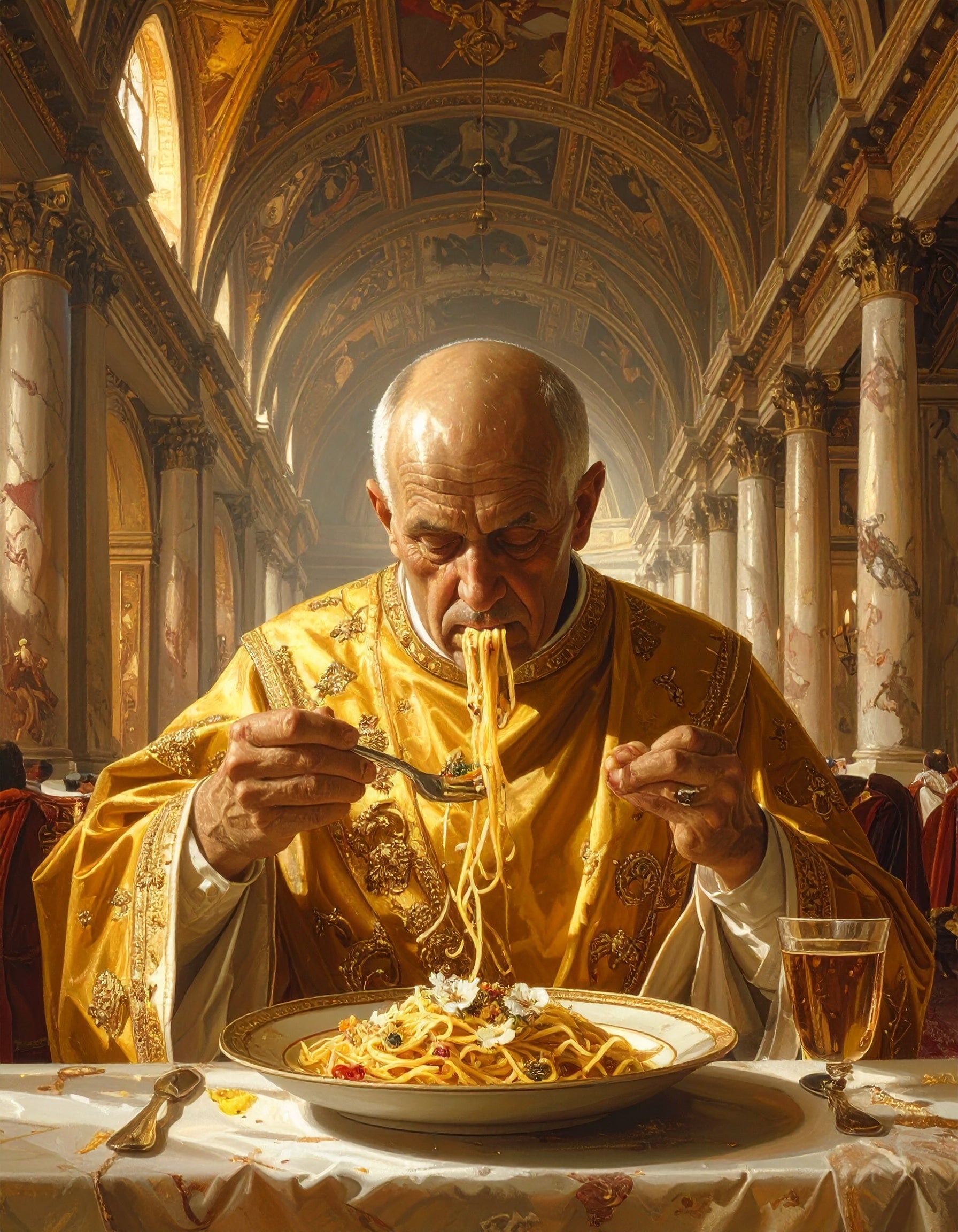
- Papal Approval: Records show that guanciale was served at papal banquets as early as the 17th century — proof that even the Vatican loves a little sin.
- Roman Humor: Locals call overcooked guanciale “il peccato mortale” — the mortal sin.
- In Popular Culture: During the 2016 earthquake, guanciale producers from Amatrice donated profits from Amatriciana sales to fund reconstruction, turning pork fat into solidarity.
Closing Reflection – The Quiet Philosopher
If tomato is passion and pepper is debate, guanciale is Rome’s patience.
It asks for nothing but time, and gives everything back — aroma, body, warmth, identity.
In its slow rendering lies the essence of Roman cooking: the belief that simplicity is not lack, but mastery.
It’s the opposite of instant gratification — a philosophy disguised as breakfast.
When the fat finally melts clear and the kitchen fills with its scent, something ancient happens.
You realise that in Rome, even silence has flavour.